

The Emirates ends nearly 60 years of coordinated oil policy, targeting 5 million bpd capacity as Strait of Hormuz tensions persist.
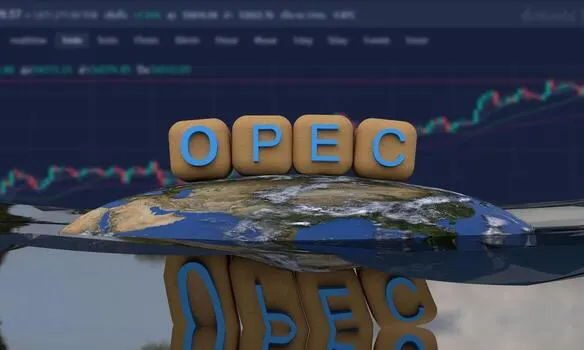
ABU DHABI – In a landmark move that reshapes the global energy landscape, the United Arab Emirates has officially announced its decision to exit the Organization of the Petroleum Exporting Countries (OPEC) and the broader OPEC+ alliance. The decision, effective in 2026, concludes nearly six decades of UAE participation in coordinated production quotas, signaling a major shift toward national production sovereignty.
A Move Rooted in Capacity and Flexibility
The UAE’s Ministry of Energy and Infrastructure characterized the exit as a “sovereign policy decision” following a comprehensive review of national energy strategy. By operating outside the OPEC quota system, the UAE aims to gain the flexibility required to respond to market demands at its own pace.



“This is a policy decision made after a careful look at current and future policies related to production levels,” stated UAE Energy Minister Suhail Mohamed al-Mazrouei. He emphasized that the timing was chosen specifically because the world is currently undersupplied, ensuring that the UAE’s move would have a “minimum impact on prices.”
Strategic Expansion Toward 5 Million BPD
A primary driver behind the departure is the UAE’s massive investment in upstream capacity. The nation is currently on track to expand its production potential from 3.4 million barrels per day (bpd) to 5 million bpd by 2027. Industry analysts note that OPEC’s restrictive quotas had increasingly become a “straitjacket” for the Emirates, stifling the return on billions of dollars invested in infrastructure.
Dr. Sultan Al Jaber, Minister of Industry and Advanced Technology and ADNOC CEO, reinforced that the move aligns with long-term strategy and market stability, allowing the UAE to better manage its resources independently.
Impact on Global Markets and Shipping
The announcement comes at a time of extreme market volatility. Brent crude is currently trading between $111–$113 per barrel, with WTI remaining above $100. Despite the UAE’s plan for increased autonomy, logistics remain a significant bottleneck.
The ongoing conflict between the U.S. and Iran has left the Strait of Hormuz—a chokepoint for 20% of global oil—heavily restricted. Experts suggest that as long as the waterway remains impassable for the majority of tankers, the UAE’s increased production capacity cannot fully reach global markets, temporarily shielding prices from a downward trend.

France Sets Fossil Fuel Deadlines
While the UAE shifts its production strategy, Europe is moving in the opposite direction. At a global conference in Santa Marta, Colombia, France announced a “first of its kind” roadmap to phase out:
- Coal by 2030
- Oil by 2045
- Gas by 2050
The French initiative highlights a growing divide between major producers seeking to maximize output and European consumers accelerating the transition toward carbon neutrality.
Looking Ahead: A Weaker OPEC?
The departure of the UAE, one of OPEC’s most reliable and high-capacity members, raises questions about the organization’s future ability to calibrate supply. Following Qatar’s exit in 2019, the UAE’s withdrawal further thins the group’s ranks, potentially leading to a shift toward market share competition among the world’s top producers.