

New measures target individuals and entities accused of undermining maritime transit rights in one of the world’s busiest oil shipping routes
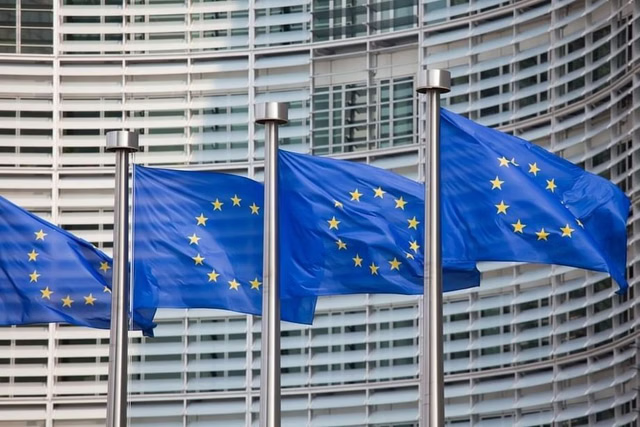
Brussels: The European Union has expanded its sanctions framework against Iran, introducing new measures aimed at protecting freedom of navigation in the strategically vital Strait of Hormuz.

The Council of the European Union announced that the revised legal framework will now cover individuals and entities involved in actions that violate internationally recognised transit and innocent passage rights through international straits. The move is intended to strengthen maritime security and deter disruptions in the Gulf region.
Under the updated sanctions regime, the EU will be able to impose travel bans and asset freezes on persons and organisations linked to activities that threaten safe navigation through the Strait of Hormuz. EU citizens and companies will also be prohibited from providing financial resources or economic support to those listed under the sanctions framework.



In an official statement, the Council said EU foreign ministers had reached a political agreement on the issue during the Foreign Affairs Council meeting held on April 21, 2026.
The Council accused Iran of taking actions against vessels transiting through the Strait of Hormuz that are “contrary to international law.” According to the statement, such actions infringe upon established rights of transit passage and innocent passage guaranteed under international maritime regulations.
The Strait of Hormuz remains one of the world’s most critical maritime chokepoints, handling a significant share of global oil and gas shipments. Any disruption in the region has the potential to affect global energy markets and international trade, making maritime security a major concern for Gulf nations and global powers alike.
Earlier in March 2026, the European Council called for the full implementation of United Nations Security Council Resolution 2817, which emphasises maritime security and the protection of navigation rights. The resolution also condemned acts that threaten vessel traffic or obstruct the movement of ships entering or leaving the Strait of Hormuz.
The EU statement further noted that the bloc’s High Representative for Foreign Affairs and Security Policy had welcomed the April 9 ceasefire agreement between the United States and Iran. The official also urged all parties to ensure safe passage and uphold international law in the Strait of Hormuz.
The latest sanctions expansion reflects growing international concern over maritime tensions in the Gulf, particularly in routes considered essential for global energy transportation.