

GCC-EU strategic partnership seen as essential for protecting trade routes, energy flows, and regional security amid rising geopolitical tensions.
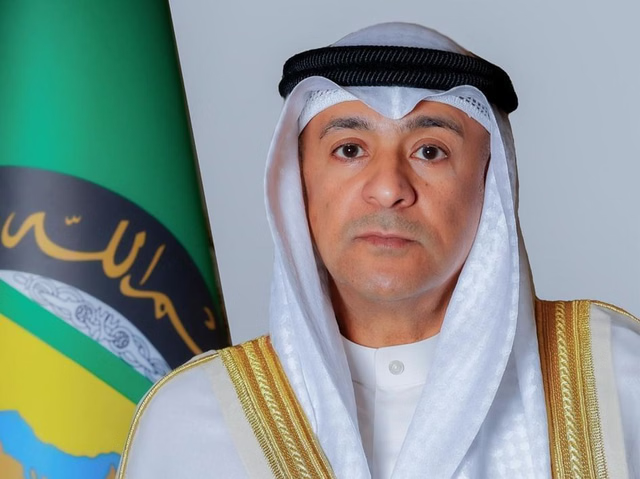
Prague: Stressing the growing importance of the Gulf region in maintaining global economic balance and maritime security, Jasem Mohamed Albudaiwi, Secretary General of the Gulf Cooperation Council, said the stability of the Gulf has become a key pillar for international economic growth, energy security, and safe maritime navigation.

Speaking during a panel session on GCC-European strategic relations at the GLOBSEC Global Security Forum 2026 in Prague on May 23, Albudaiwi highlighted the increasing strategic coordination between the GCC and the European Union in addressing global security and economic challenges.


He noted that the Gulf countries continue to prioritise security, stability, development, and prosperity not only for the region but also for the wider international community. According to him, the rapidly evolving geopolitical landscape and growing economic uncertainties have made stronger GCC-EU cooperation more important than ever.
Albudaiwi said the participation of the GCC General Secretariat in the international forum reflects the council’s commitment to strengthening communication with global partners, policymakers, and experts. He added that such engagements help reinforce collective efforts aimed at preserving regional and international stability.
Referring to recent developments in the Middle East, the GCC chief said the region has witnessed several incidents that significantly affected peace and security. He emphasised that GCC nations have consistently pursued diplomatic initiatives to reduce tensions and encourage dialogue as part of broader efforts to safeguard regional peace.
“The stability of the Gulf region remains a fundamental pillar for the stability of the global economy and international maritime security,” he reiterated during the discussion.
He also underlined the critical need to secure maritime and air corridors, ensure freedom of navigation, protect international supply chains, and maintain the stability of global energy markets. Any disruption in the Gulf and surrounding waterways, he warned, would have direct consequences for Europe, global trade, and international energy security.

According to Albudaiwi, recent geopolitical developments have demonstrated how closely interconnected the security of Europe and the Middle East has become. He stated that Gulf stability is no longer merely a regional concern but a shared international priority.
Looking ahead, the GCC Secretary General expressed optimism about the future of GCC-EU relations, noting that both sides are seeking to deepen cooperation across multiple sectors. He added that the upcoming GCC-EU Summit is expected to further strengthen strategic ties and produce tangible outcomes that benefit both regions.
The remarks come at a time when global attention remains focused on energy security, maritime trade routes, and geopolitical stability in the Gulf region, which plays a central role in international oil exports and global commerce.