

Maritime traffic reaches record post-war levels following interim ceasefire agreement, even as US lawmakers pass historic resolution restricting presidential military authority.
DUBAI: Maritime commercial traffic through the vital Strait of Hormuz has surged to its highest level since the outbreak of hostilities in late February, signaling a tentative normalization in global trade routes. The shipping rebound comes as US President Donald Trump announced that conditions in the strategic waterway are returning to normal, following an interim ceasefire deal brokered by Washington and Tehran in Switzerland. Concurrently, in a historic move, the US Senate approved a War Powers resolution aiming to permanently block unauthorized military actions against Iran, underscoring intense political friction in Washington.
Data from maritime tracking firms, including Kpler and AXSMarine, confirmed a sharp recovery in shipping volumes, with over 40 commercial vessels and commodity carriers transiting the 34-kilometer-wide passage in a single 24-hour window. This marks a dramatic turnaround from the peak of the blockade when daily transits collapsed to single digits, stranding billions of dollars in cargo. Marine industry analysts describe this uptick as a significant confidence booster for global energy markets, though traffic still remains roughly a third of peacetime levels.


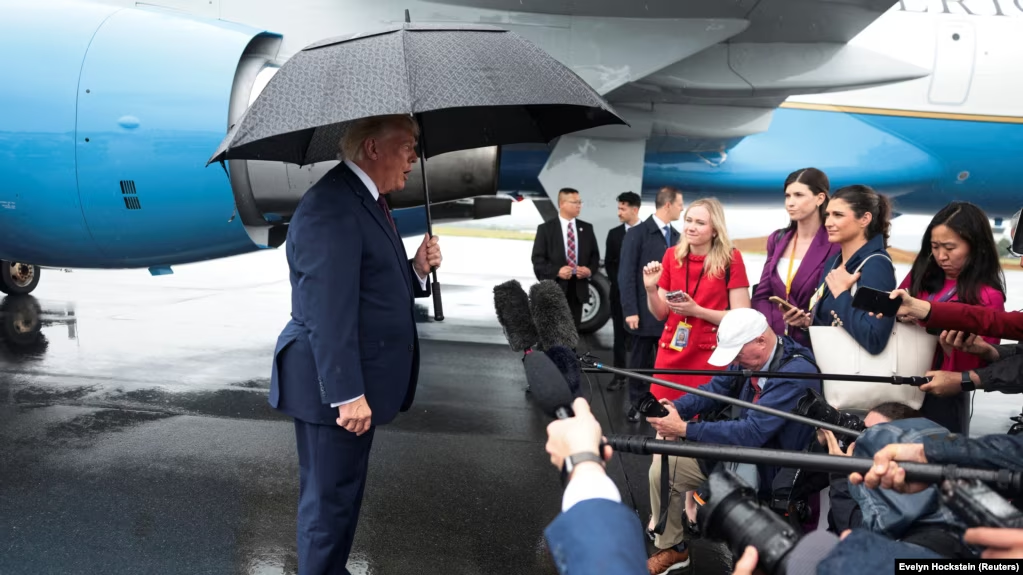
Speaking on the rapid development, President Donald Trump lauded the interim agreement—spearheaded by Vice President JD Vance—as a major diplomatic victory. The Trump administration emphasized that the temporary lifting of sweeping oil sanctions has allowed maritime operations to resume swiftly, restoring stability to the Persian Gulf. Concurrently, US Secretary of State Marco Rubio arrived in the United Arab Emirates on a multi-nation Gulf tour to reassure regional allies regarding security parameters and the enforcement of the maritime truce.

However, the administration’s handling of the conflict faces intense domestic resistance. In a razor-thin 50-48 vote on Tuesday, the US Senate passed a War Powers resolution requiring the President to obtain explicit congressional authorization before resuming any military operations against Iran. Four Republican senators broke ranks to vote with the Democrats, delivering a historic, albeit symbolic, rebuke to the administration’s unilateral executive strategy.

While the geopolitical future of the waterway remains heavily debated—with Iranian negotiators insisting Tehran must play a permanent role in its administration—the physical flow of oil, liquefied natural gas (LNG), and dry bulk commodities is picking up pace daily.
The Geopolitical Weight of Hormuz: The Strait of Hormuz is the world’s most critical energy chokepoint, normally handling 20% to 25% of global oil consumption. The conflict, which erupted in February 2026, led to the first total closure of the strait in modern maritime history, stranding an estimated $125 billion worth of vessels and cargo. The tentative reopening follows a shaky interim ceasefire agreement signed mid-June, which grants temporary sanctions relief to Iran in exchange for the unhindered passage of international commercial shipping.