

Internal rift widens over Strait of Hormuz conflict as new Supreme Leader Mojtaba Khamenei vows retaliation while pragmatists pursue regional mediation
TEHRAN / DUBAI — July 13, 2026 — A major power struggle has intensified within the highest echelons of the Iranian establishment following the recent military exchanges between the United States and Iran in the Strait of Hormuz. The internal conflict exposes a deepening rift between a hardline faction demanding immediate military retaliation for the assassination of former Supreme Leader Ayatollah Ali Khamenei and pragmatic officials pushing for a diplomatic settlement through international regional mediators.

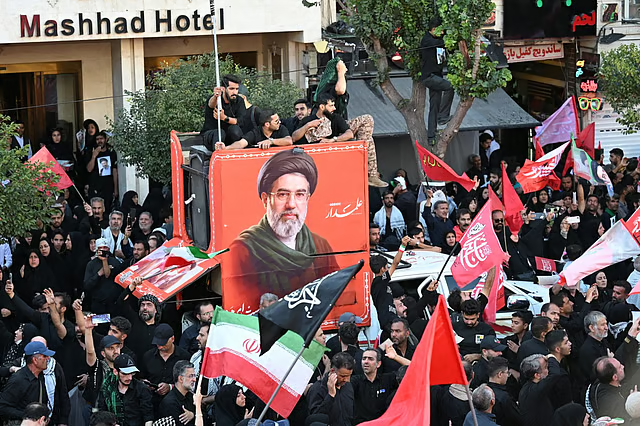
The internal struggle over Iran’s strategic direction has become increasingly public in the wake of the late leader’s funeral proceedings in Mashhad. While official negotiators continue back-channel discussions with Oman and Qatar to de-escalate regional hostilities, the Islamic Revolutionary Guard Corps (IRGC) and clerical hardliners are fiercely resisting any compromise with Washington.



Iran’s newly appointed Supreme Leader, Ayatollah Mojtaba Khamenei, issued his first major written statement since taking office, explicitly pledging national vengeance against the U.S. and Israel for his father’s killing. The statement, broadcast on Iranian state television, declared that “vengeance is the will of our nation and must inevitably be carried out,” signaling alignment with the hardline resistance camp. Despite assuming the highest office on March 8, 2026, the 56-year-old leader has notably abstained from making any public in-person appearances, citing severe security protocols and ongoing recovery from injuries sustained in the initial strikes.
The hardliners’ posture was fully on display during the week-long funeral ceremonies, where thousands of mourners raised red flags—a traditional symbol of unresolved blood feuds and incoming vengeance. The demonstrations targeted the strategic Strait of Hormuz corridor, asserting that the country’s defense apparatus remains ready to control the global shipping chokepoint regardless of diplomatic overtures.
Conversely, a pragmatist bloc led by parliamentary officials and diplomats is warning that a full-scale war could trigger an economic collapse. Iran’s Foreign Ministry confirmed that Tehran has maintained communication with a Qatari delegation currently visiting the capital to revive the framework of the bilateral memorandum of understanding signed last month. Foreign Minister Abbas Araghchi insisted that Iran has adhered strictly to its commitments, warning that long-term stability is contingent on mutual compliance rather than military escalation.
The political polarization comes at a precarious moment, as U.S. President Donald Trump warned that any attempts by Iran to target American leadership would result in the U.S. military moving to “completely decimate” critical Iranian installations. Despite the severe rhetoric, diplomatic lines through Muscat and Doha remain active as international brokers try to formalize a sustainable truce before the current military friction expands into a broader regional war.