



Kuwait intercepts drones and Houthis target Red Sea tankers following Trump’s warning on Strait of Hormuz shipping
DUBAI, July 23, 2026:United States forces launched a 12th consecutive night of airstrikes against targets across Iran early Thursday, hitting military and energy infrastructure in Khuzestan and Bushehr provinces as Tehran vowed a direct “eye for an eye” response to escalating American bombardment.
US Central Command (CENTCOM) confirmed overnight operations targeting locations in Ramshir, Ahvaz, and Bushehr, marking one of the sustained aerial campaigns in the region in recent years. The strikes follow days of intensified military exchanges across the Middle East that have threatened critical maritime trade routes and regional stability.


Regional security defenses were placed on high alert as the fallout expanded across the Gulf. Kuwaiti military authorities announced that domestic air defense systems successfully intercepted multiple hostile drones over its border areas following what officials identified as an incoming attack originating from Iranian territory.
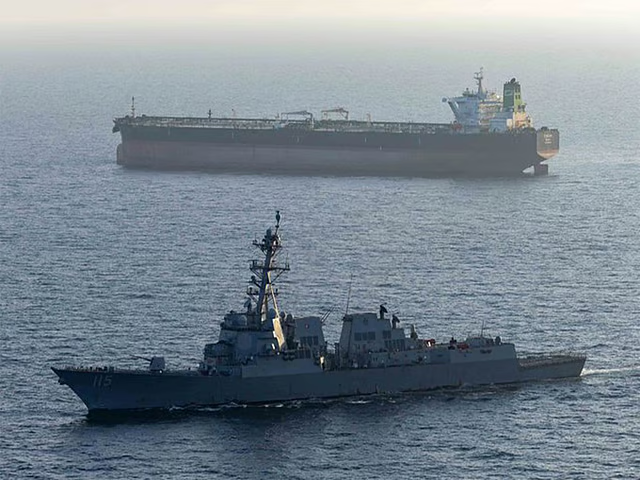
Simultaneously, maritime security agencies reported fresh disruptions in the Red Sea. Yemen’s Iran-aligned Houthi militia claimed responsibility for launching missile and drone strikes against two Saudi-flagged crude oil tankers navigating commercial lanes off the western coast of Yemen.
The sharp military escalation follows explicit warnings issued by US President Donald Trump, who declared that the US military would target an Iranian bridge or power generation facility for every commercial vessel attacked or disrupted in the Strait of Hormuz—a vital choke point through which a fifth of the world’s petroleum supply passes.


Responding to Washington’s threats, Iranian Foreign Minister Abbas Araghchi rejected the ultimatum and cautioned that Tehran would respond in kind to any hit on its critical infrastructure. Araghchi stated that Iran holds full military readiness to match American operations under an “eye for an eye” defense doctrine.
International shipping bodies and regional governments have urged immediate de-escalation, warning that continued attacks on energy infrastructure and commercial transport lanes risk triggering a broader regional conflict and severe disruptions to global commodity markets.