



Traffic authorities urge drivers to allow extra travel time and follow summer vehicle safety protocols amidst peak morning bottlenecks.
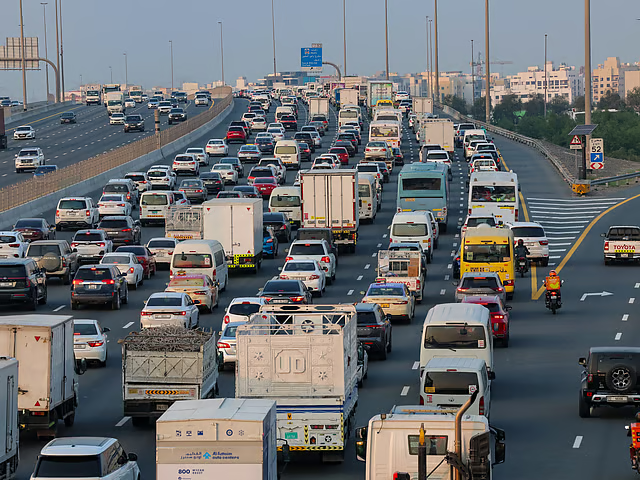
DUBAI, July 27, 2026 : Heavy morning congestion and a series of minor traffic incidents created significant delays along major arterial routes connecting Dubai and Sharjah on Monday, prompting authorities to advise commuters to budget extra travel time.
Traffic monitoring systems indicated dense bottlenecks along key interstate corridors during the peak morning rush hour. Drivers travelling south along the E11 route from Al Khan in Sharjah toward Dubai’s Hor Al Anz East experienced prolonged slowdowns, with congestion spilling over into several key commercial and industrial hubs.



Gridlock was particularly pronounced across Sharjah’s Industrial Areas 3 and 13, the broader Industrial Area network, and the approach toward Al Hamriya Port. On the Dubai side, heavy traffic built up around Me’aisem Second and along Sheikh Mohammed Bin Zayed Road (E311) near the Jebel Ali Industrial district. Slow-moving traffic also slowed journeys around Al Barsha South Fifth.

In addition to volume-related delays, a spate of minor road accidents contributed to regional tailbacks. Incidents were reported in Al Qusais Industrial Fifth, Corniche Deira, Me’aisem Second, and along Expo Road near Dubai Investments Park First. Traffic patrols responded to clear the sites and restore normal traffic flow.
Road transport officials and police forces across both emirates reiterated calls for motorists to maintain safe distance intervals, adhere strictly to lane discipline, and stay updated through live navigation tools during peak hours.
Alongside the traffic alerts, Dubai Police issued a summer vehicle safety advisory as temperatures continue to rise across the region. Authorities urged motorists to park in shaded areas whenever possible and utilize reflective windscreen shades to mitigate interior heat accumulation.
Police further reminded drivers never to leave children or pets inside parked vehicles—even for short intervals—and recommended routine checks on tire pressure and engine coolant levels to prevent heat-related breakdowns on busy highways.