

On World Day Against Trafficking in Persons, Khalid Bin Sultan Al Qasimi Humanitarian Foundation puts one name to a programme expected to protect 7,000 migrant children and adolescents across Mexico
Sharjah:11-year-old Joaquín wants to return to school. One day, he hopes to become a footballer. These are ordinary dreams for a child whose journey has been anything but ordinary.
More than two years ago, Joaquín left Venezuela with his family. They crossed rivers, jungle paths and national borders before reaching a shelter in Mexico, where he found safety, other children to play with and adults trained to support him.


“I like being here because I can play and spend time with other children,” he says.
Joaquín has a name, a dream and a future he can still imagine. He is also one of 7,000 migrant children and adolescents the Sharjah-based Khalid Bin Sultan Al Qasimi Humanitarian Foundation (KSQF) is working to protect through its Guardians of Children programme in Mexico.
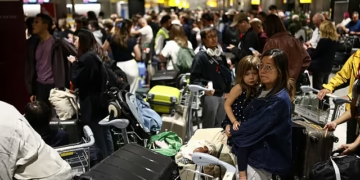
Mexico has become one of the region’s most significant transit countries for migrant children. In the first nine months of 2024 alone, authorities recorded 113,542 cases of irregular migration involving children and adolescents, a 78.6% increase compared with the same period in 2023. Nearly 6,700 of those children were travelling alone, placing them at heightened risk of trafficking, exploitation and other forms of abuse. Against this backdrop, programmes that identify and support children before exploitation occurs have become increasingly critical.
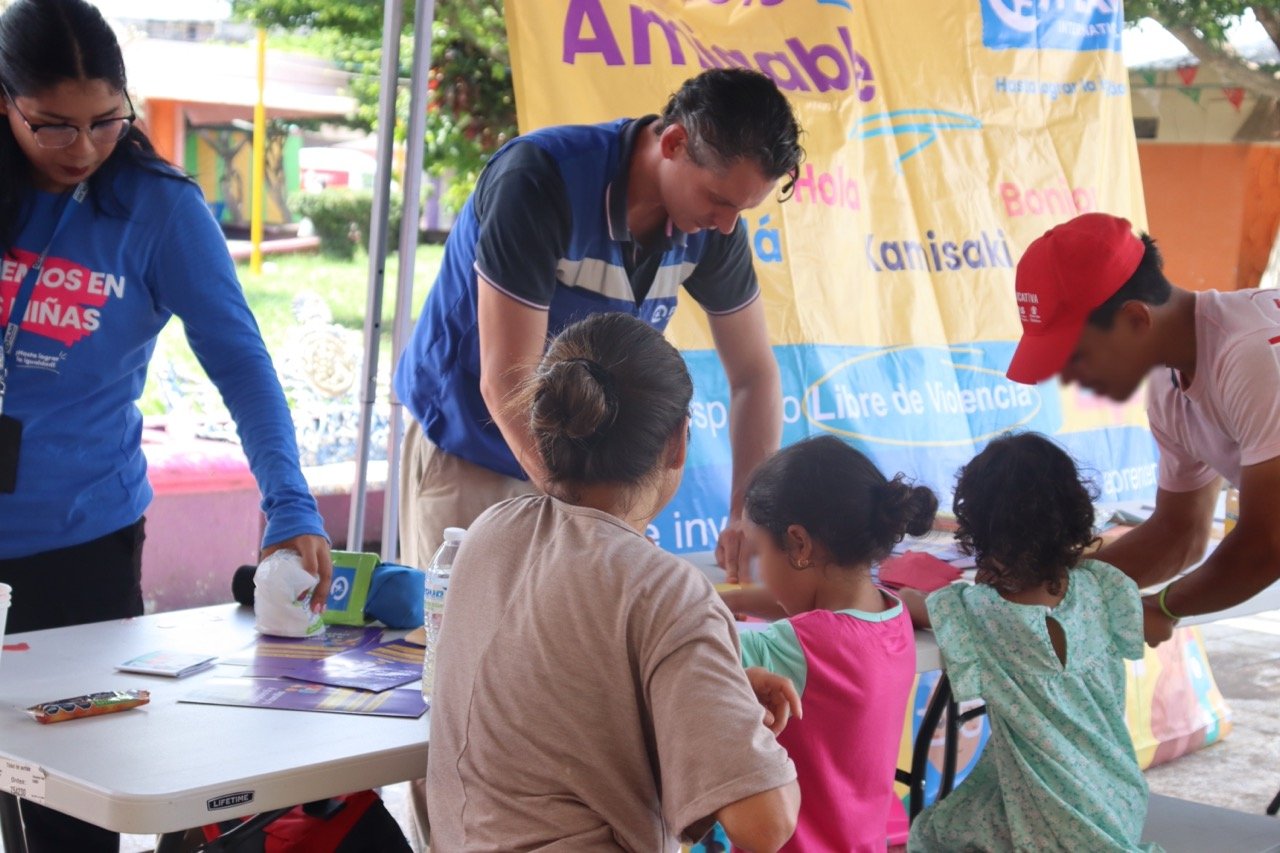
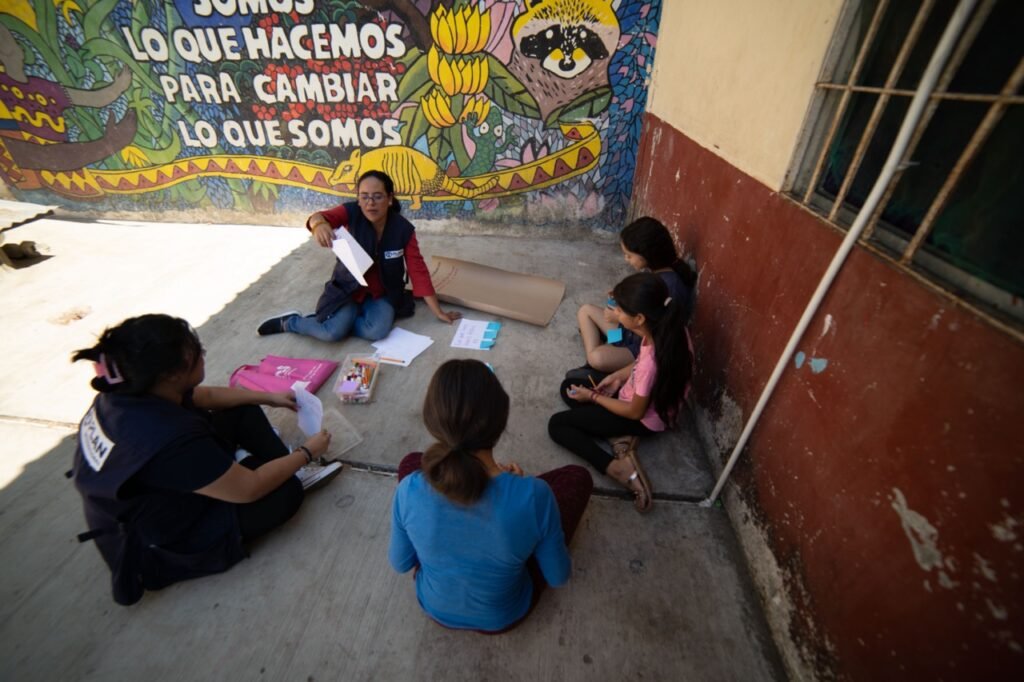
Implemented on the ground with Plan International across Tapachula, Mexico City and Ciudad Juárez, the programme provides safe spaces, psychosocial care, mobile health services and referrals to specialised child protection support.
On World Day Against Trafficking in Persons, Joaquín’s story gives a human face to the thousands of children whose journeys can expose them to trafficking, exploitation and abuse.


The risks that appear along the journey
Migration itself does not place a child in the hands of traffickers. The danger grows in the gaps along the journey: no safe place to sleep, no access to education or healthcare, and no trusted adult to turn to.
An offer of transport can become a means of control. A promise of work can lead to forced labour. Even a place to stay may carry conditions that expose a child to further harm.
Guardians of Children is designed to intervene at this critical point, before vulnerability is exploited. Across three cities in Mexico, the programme gives migrant children and adolescents access to safe spaces, healthcare, psychosocial support and specialised protection services. It also reaches a further 15,000 people through community awareness initiatives.
Alongside these awareness efforts, the programme builds local capacity by training shelter personnel, healthcare workers, volunteers and community members to identify indicators of trafficking and connect children with appropriate services.
Why one name can say more than a number
Children account for nearly 38% of detected trafficking victims worldwide. The scale is immense, but large figures can sometimes make the individual lives behind them harder to see.
Lujan Mourad, Director of the Khalid Bin Sultan Al Qasimi Humanitarian Foundation, said: “When a number becomes too large, people can stop seeing the individual lives within it. Joaquín gives one name to a reality affecting thousands of children. His story allows us to see the journey, the uncertainty and the moments in which timely protection can make a decisive difference.
She added: “Joaquín is not being presented as a victim of trafficking. He represents children whose circumstances can expose them to traffickers and abusers if trusted support does not reach them in time. Behind his name are 6,999 others who also need safe spaces, healthcare, psychological support and adults equipped to protect them.”
She concluded: “Through Guardians of Children, KSQF is working to ensure that vulnerability is recognised before it is exploited and that children encounter credible support before a dangerous offer appears to be their only choice.”
A wider mission to protect children
This same model of protection is adhered to across KSQF’s global portfolio. Guided by its pillars of safeguarding, advocacy and capacity building, KSQF develops long-term programmes that protect children from trafficking, exploitation, forced marriage, violence and hazardous labour.
In 2025, its initiatives reached more than 36,000 people across Morocco, Mexico and Zanzibar. In Morocco, the Foundation supports community-based child protection systems and services for children in street situations. In Zanzibar, it is expanding medical, psychosocial and legal support for survivors of gender-based violence.
On World Day Against Child Labour, KSQF also announced a programme with UNICEF in the Democratic Republic of the Congo to address child labour and exploitation in mining communities. The initiative will help 200 children leave hazardous work, support 100 families and train 100 service providers in child protection.
Whether in a shelter in Mexico, a street in Morocco, or a mine in the DRC, KSQF’s purpose is consistent: to reach children before their vulnerability becomes someone else’s opportunity to exploit them.
To learn more about KSQF’s initiatives or support the Guardians of Children program in Mexico, visit www.ksqf.ae.