

Strict carry-on rules remain critical as low-quality cells, hidden internal damage, and unverified imports pose acute fire and toxic gas hazards in pressurized cabins.
DUBAI : Aviation safety experts and consumer electronics specialists in the United Arab Emirates are issuing fresh guidance on the severe operational hazards associated with lithium-ion power banks aboard commercial flights.

While portable chargers have become essential travel items for long-haul journeys and transit days, aviation authorities and industry leaders stress that these standalone energy units carry distinct fire and toxic gas risks if damaged, poorly manufactured, or handled incorrectly.


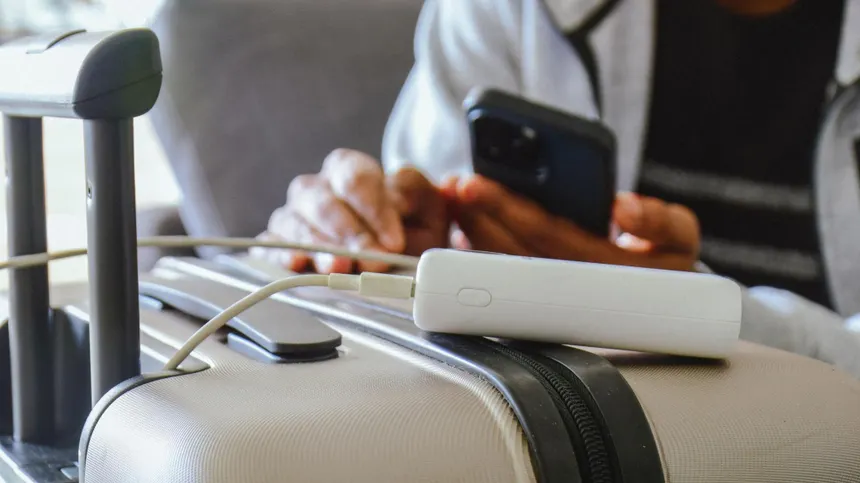
Why Power Banks Are Restricted to Cabin Baggage
Unlike smartphones or laptops, where batteries are embedded within tightly engineered hardware and regulated by integrated software, power banks act as unattached, high-capacity energy stores. This structural difference explains why international aviation regulations, backed by guidelines from the International Air Transport Association (IATA), strictly prohibit power banks in checked luggage.

Industry leaders emphasize that spare portable batteries are regularly subjected to physical drops, variable ambient temperatures, and mismatched charging accessories.
“Unlike phones or laptops, which are part of fully engineered and tightly controlled systems, power banks are often loosely regulated and widely sourced from varying levels of manufacturing quality,” said Medy Navani, Co-Founder of Instinkt. “Inside an aircraft, conditions are very different—pressure, environment, and limited response capability all increase the potential impact of any failure.”
If a battery incident occurs inside the passenger cabin, flight attendants trained in aviation fire safety can identify and contain the threat immediately using specialized fire containment bags and extinguishers. Conversely, a thermal event inside an inaccessible cargo hold could quickly escalate into a catastrophic inflight crisis.
The Mechanics of Battery Failure: Thermal Runaway and Toxic Gas
When a lithium-ion battery cell experiences an internal short circuit—caused by mechanical impact, a manufacturing defect, or overcharging—the balance between its positive and negative components breaks down. This triggers a rapid chain reaction known as thermal runaway.
“A damaged separator, manufacturing defect, overcharge, or internal short can allow the positive and negative parts of a cell to interact,” explained Mukul Anand, Founder at R3 Factory. “The heat rises faster than it can escape… In a multi-cell pack, the heat can trigger cell-to-cell propagation.”
During thermal runaway, the temperature inside the battery rises exponentially within seconds, leading to the venting of hot, highly volatile gases, fire, or explosive rupture. Expert analysis highlights that the immediate danger inside an aircraft extends beyond flame.
“When a lithium battery malfunctions, one of the first risks is the release of highly toxic gases,” Navani noted. “These are not ordinary fumes; they pose a serious threat to human health, particularly to the respiratory system.”
Cheap Imports and Uncertified Devices Heighten Inflight Hazards
The proliferation of unbranded, counterfeit, or promotional power banks has significantly amplified safety concerns. Low-cost units frequently utilize recycled or low-grade cells, inadequate internal wiring, and incomplete battery management systems (BMS).
To safeguard passengers, retail and technical specialists recommend verifying local and international safety standard certifications before purchasing.
- ECAS Compliance: In the UAE, consumers should confirm that devices comply with the Emirates Conformity Assessment Scheme (ECAS).
- Global Safety Standards: Look for official certification markings such as UN 38.3 (UN transport testing for lithium batteries), UL 2056, or IEC 62133-2.
- Legitimate Retailers: Avoid unverified promotional giveaways or items purchased through unauthorized third-party digital marketplaces.
“Counterfeit or poorly manufactured products often use lower-quality battery cells and may lack essential protection circuits that guard against overheating, overcharging, and short circuits,” said Ashish Panjabi, COO of Jacky’s Retail.
Key Warning Signs and Best Practices for Air Travellers
Passengers must inspect their portable chargers prior to departure. A compromised unit often exhibits clear physical or functional warning signs before reaching critical failure.
| Physical Warning Signs | Functional Warning Signs |
| Swelling or distorted casing | Rapid, unexpected capacity drop |
| Cracks, dents, or deep scratches | Excessive heat while charging or idle |
| Discoloration or fluid leakage | Hissing, popping, or strange odors |
| Loose or scorched charging ports | Unreadable or missing Watt-hour (Wh) ratings |
Standard airline safety guidelines restrict power banks to a maximum rating of 100 Watt-hours (Wh) (equivalent to roughly 27,000 mAh at 3.7V) for standard cabin transport without prior operator approval.
Travellers should keep battery ports protected from loose metal objects, such as keys or coins, to prevent accidental external short circuits. If a power bank begins emitting unusual heat, smoke, or odor during a flight, passengers must cease using it immediately and notify cabin crew.