


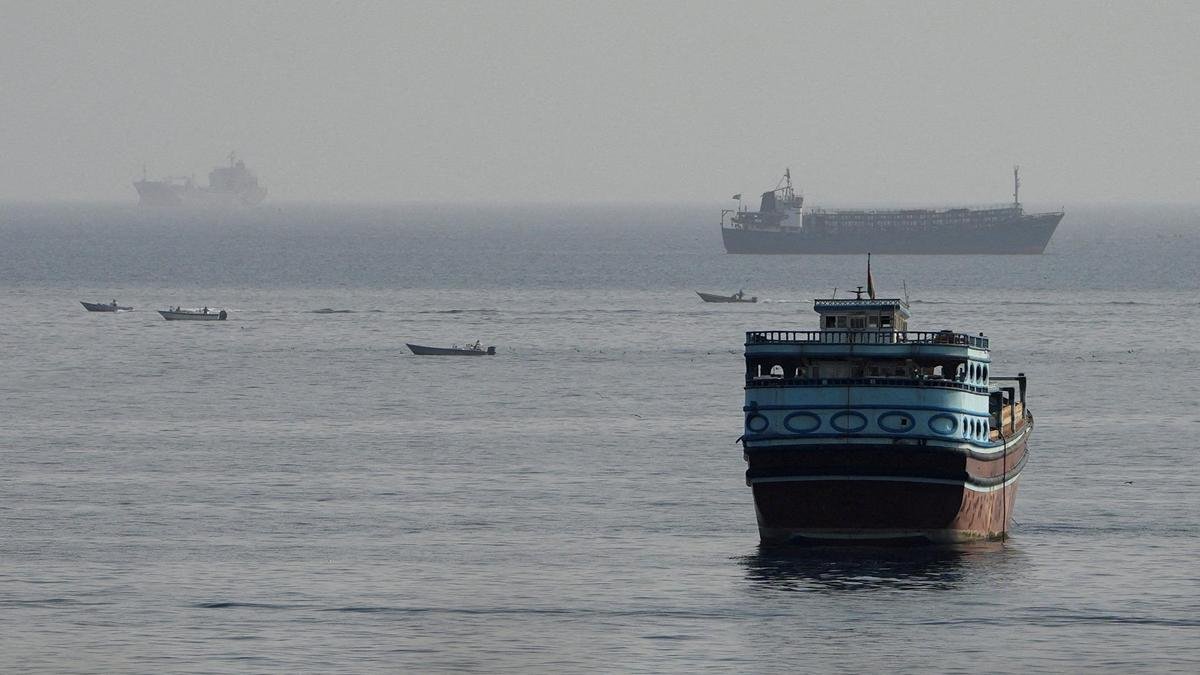
Muscat and Tehran finalize terms for a new maritime corridor aimed at improving navigation efficiency and enhancing regional trade security.

MUSCAT : Oman and Iran are nearing the execution of a definitive agreement to establish a new commercial shipping route passing through the Strait of Hormuz, according to officials familiar with the negotiations. The upcoming bilateral pact aims to streamline maritime traffic and establish standardized operational frameworks along one of the world’s most critical energy transit bottlenecks.
Delegations from both nations have concluded technical assessments regarding route coordinates, safety protocols, and joint navigational monitoring. The final agreement will establish formal mechanisms to manage bilateral vessel movements, address environmental contingencies, and ensure smooth transit through shared maritime boundaries.


The Strait of Hormuz, a narrow waterway separating Iran and Oman, connects the Persian Gulf with the Gulf of Oman and the Arabian Sea. It serves as the primary gateway for roughly a fifth of global petroleum consumption, making traffic management along the corridor a central focus of regional maritime policy.
Under the proposed terms, the designated lane will utilize updated vessel traffic service systems to minimize delays for commercial tankers and bulk carriers. Joint technical committees are slated to oversee real-time data sharing between maritime authorities in Muscat and Bandar Abbas.

Omani officials noted that the initiative aligns with national logistics strategies to position the Sultanate’s ports as premier deep-water hubs outside the immediate perimeter of the Gulf. By optimizing transit through the strait, maritime operators expect reduced waiting times and lower operational risks for international shipping lines.
Final ceremonial signing proceedings are expected to take place in Muscat following formal ministerial sign-offs in both capitals.