

White House counters Tehran’s compensation terms, deepening diplomatic deadlock while Houthi drone strikes hit Saudi and Yemeni targets.
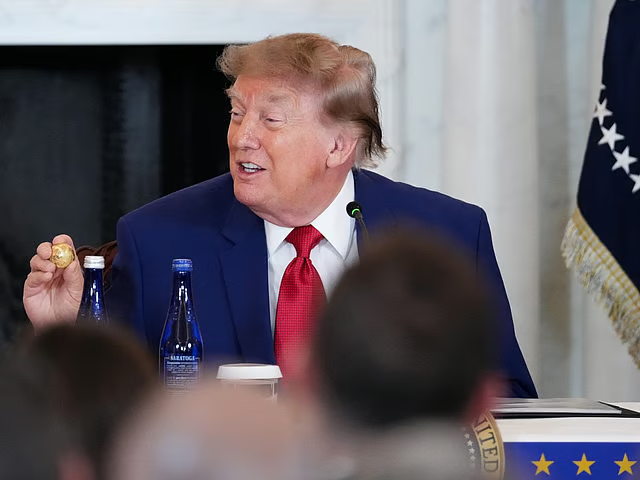
WASHINGTON/DUBAI — US President Donald Trump has demanded that Iran pay compensation for decades of regional instability, American casualties, and local proxy conflicts, hardening Washington’s stance as diplomatic efforts to reopen the Strait of Hormuz hit a wall.

Trump’s assertion came via social media posts following Tehran’s demand for US war reparations as a prerequisite for restoring traffic through the vital energy corridor. The rhetorical clash sent global oil prices higher, with Brent crude rising over 4% toward $87 a barrel amid fears that the strategic shipping bottleneck will remain blocked indefinitely.
“I am likewise demanding compensation from Iran,” Trump wrote, citing past attacks on American service members, victims of roadside bombs, and civil unrest inside Iran over recent decades. In a subsequent statement, Trump argued that Tehran should also bear financial responsibility for casualties and destruction across Lebanon, Syria, Yemen, and Gaza.



Iranian officials have firmly rejected Washington’s terms. The Iranian Revolutionary Guard Corps (IRGC) reiterated that the Strait of Hormuz—through which roughly a fifth of global petroleum supply normally flows—will not return to pre-war transit conditions without a formal rollback of US economic sanctions and compensation for damages incurred during recent hostilities. Deputy Parliamentary Speaker Ali Nikzad stated through state media that Western powers must adjust to a “new regional order,” adding that military pressure will not force the waterway open.
The diplomatic standoff coincides with renewed violence across secondary fronts in the region. Iranian-aligned Houthi forces launched drone attacks targeting Saudi Arabia’s Jazan oil refinery. Saudi authorities confirmed the resulting fire was contained without casualties. The Houthis also staged a second assault within 24 hours on the Yemeni port city of Mocha, killing seven people and damaging port facilities.
In Gaza, broader regional negotiations remain bogged down over terms for a lasting cease-fire. While Hamas expressed willingness to engage with a US-backed framework, Israeli Prime Minister Benjamin Netanyahu insisted that any military pullout remains contingent on the full disarmament of militant factions.
Speaking to reporters in the Oval Office, Trump described US naval capabilities in the area as an “infallible steel wall” while acknowledging that Iranian forces still retain the ability to disrupt maritime lanes. To cushion domestic markets against rising shipping delays, the White House extended a 90-day Jones Act waiver permitting foreign vessels to transport energy and agricultural supplies between US ports.
Direct negotiations between Washington and Tehran remain frozen. Muscat continues to serve as an intermediary, brokering limited technical discussions between Oman and Iran over potential emergency shipping corridors, though no final agreement has been signed.