


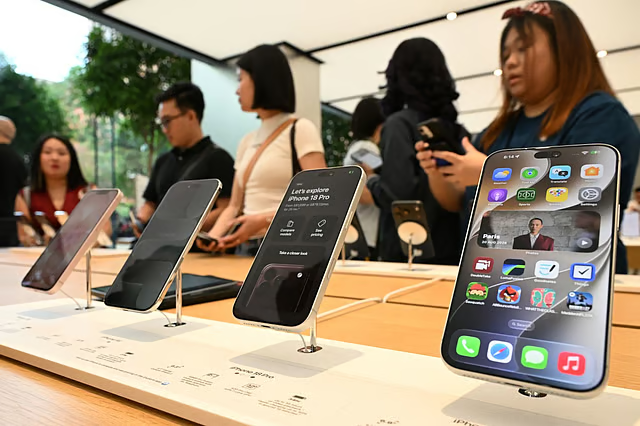
The iPhone 18 Pro and Pro Max introduce physical f/1.48–f/4 blade apertures and pro-tier manual tools, shifting mobile optics toward standalone camera territory.
DUBAI, Sept. 18, 2026 —
Apple’s iPhone 18 Pro and iPhone 18 Pro Max hit store shelves across the United Arab Emirates and worldwide on Friday, introducing the handset line’s first mechanical variable aperture alongside an expanded suite of manual photography controls.
The flagship devices mark an optical shift away from fixed lenses that rely exclusively on computational depth mapping. Built into the 48-megapixel Fusion Main camera, a physical six-blade iris adjusts across four steps: f/1.48, f/1.8, f/2.8, and f/4. The hardware configuration physically limits or expands light transmission and optical depth before photons strike the digital sensor.



At f/1.48, the widest setting channels light directly to minimize digital noise reduction in dim conditions, producing a shallow natural depth of field. Stopped down to f/4, the lens expands the plane of focus, ensuring multi-row group portraits stay sharp corner-to-corner without synthetic edge simulation. While variable mobile apertures previously appeared as dual-stage toggles in devices like Samsung’s Galaxy S9 series, the four-step physical mechanism gives users continuous steps previously reserved for mirrorless gear.

Complementing the hardware revisions, Apple integrated manual exposure controls natively into the iOS camera interface. Shooters can adjust shutter speed, ISO, white balance, and aperture independently. Professional tools such as live exposure histograms, manual focus peaking outlines, and algorithm-assisted subject tracking now sit inside the native camera viewfinder.
The default camera experience remains automated for casual point-and-shoot scenarios. However, the addition of tactile aperture controls and technical readouts targets creators seeking precise optical results without carrying auxiliary camera bodies.