

Abu Dhabi Police activate variable speed limit system across arterial routes as forecasters track low horizontal visibility through the rush hour.
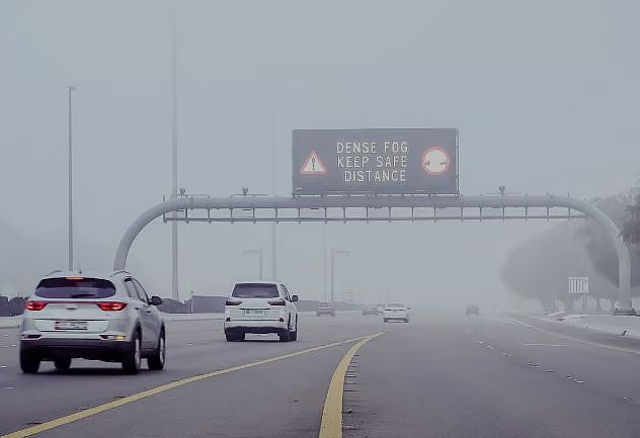
ABU DHABI — September 23, 2026 : Thick morning fog descended across Abu Dhabi on Wednesday, sharply reducing horizontal visibility and disrupting the weekday rush hour along critical transport corridors connecting the capital with neighboring emirates.
Abu Dhabi Police activated emergency variable speed systems across major highways, lowering maximum posted speeds to 80 km/h on digital gantries and overhead displays to prevent multi-vehicle pileups.
The National Centre of Meteorology (NCM) tracked heavy condensation across coastal and inland stretches, confirming that foggy conditions would linger through 8:30 am before rising surface temperatures burn off the cloud deck.


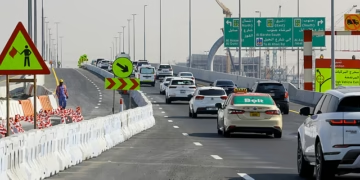
Commuters encountered long tailbacks on the E11 (Sheikh Maktoum Bin Rashid Road). Traffic crawling between Old Rahba and Al Shahama New impacted routes bordering SEHA Al Rahba Hospital and Al Wahda Academy.

Further south, severe congestion rippled outward from the Rabdan interchange near Sheikh Zayed Grand Mosque. Vehicles backed up through Mohamed Bin Zayed City and the Mazyad Mall area, feeding heavy bottlenecks into both the E30 and the E22 (Abu Dhabi–Al Ain Road).

Industrial sectors and freight paths bore equal delays. Slow-moving traffic choked the E75 around Al Faya Industrial and Al Faya South. Interchanges at Bani Yas and the Mafraq Industrial Area ground to a crawl. Approaching Zayed International Airport, motorists faced delays along the E20 and Al Khaleej Al Arabi Street, with navigation services reflecting severe amber and red corridors throughout the morning commute.
In an advisory issued via X, Abu Dhabi Police warned drivers to obey the reduced speed limits displayed on smart electronic boards. The automated traffic control system slashes speed caps to 80 km/h during weather incidents where visibility drops below 200 meters.
Police urged motorists to maintain generous following distances, switch to low-beam headlights rather than hazard flashers, and avoid abrupt lane shifts. Drivers caught in zero-visibility pockets were instructed to pull off onto the road shoulder rather than coming to an abrupt halt within active lanes.