


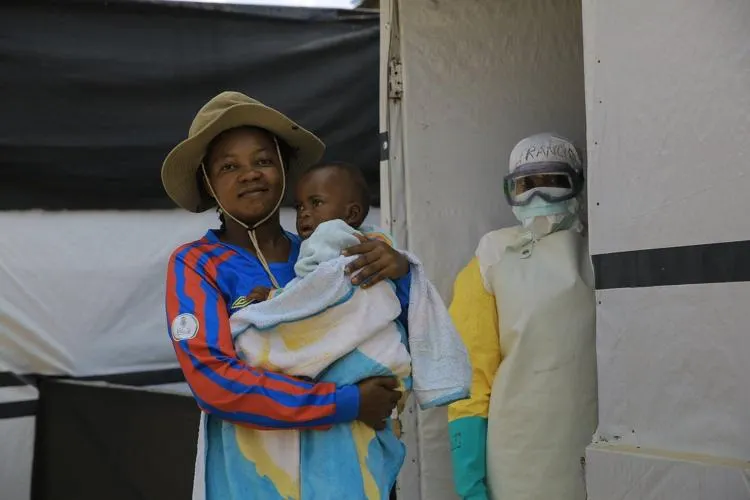
The country’s 17th outbreak has become its deadliest on record, with 3,901 deaths and acute staffing shortages crippling containment efforts across seven provinces.
KINSHASA — The Democratic Republic of the Congo has recorded more than 8,000 confirmed cases of Ebola, public health authorities said, cementing the current epidemic as the deadliest outbreak in the nation’s history.
Emergency teams face severe shortages of front-line medical staff and logistical support as infections mount across eastern regions. The epidemic, declared on May 15, is driven by the rare Bundibugyo ebolavirus strain, a variant for which there are currently no approved vaccines or targeted antiviral therapies.
According to surveillance figures released by the Congolese Ministry of Public Health, Hygiene, and Social Welfare, confirmed cases reached 8,067, with 3,901 deaths recorded through September 26 across 63 health zones in seven provinces. The crude fatality rate stands at 48.4 percent.


The World Health Organization warned that the high proportion of fatalities occurring outside formal medical facilities reveals critical weaknesses in early intervention.
“The continuously high crude case fatality ratio, and especially the continuously high rate of deaths occurring in communities, highlights the seriousness of the disease and the persistent challenges in timely case detection and access to early and adequate patient care,” the WHO stated in its latest epidemiological assessment.
High community mortality suggests that many infected individuals succumb to the illness before reaching isolation wards, driven by deep-seated community mistrust, active conflict zones, and delays in seeking medical attention.
The epidemic has spread across seven of the DRC’s 26 provinces: Ituri, North Kivu, South Kivu, Haut-Uélé, Bas-Uélé, Tshopo, and Sud-Ubangi. Ituri and North Kivu remain the primary epicenters, where ongoing armed clashes and displacement have severely disrupted contact tracing and field surveillance.

Unlike the more common Zaire strain, which devastated parts of the DRC between 2018 and 2020 but was combated using licensed treatments and vaccines such as Ervebo, the Bundibugyo virus presents unique clinical difficulties. Early symptoms often mimic endemic conditions such as malaria and typhoid, frequently presenting without obvious hemorrhagic manifestations, which complicates early triage.
Clinical trials evaluate candidate countermeasures, including monoclonal antibody therapies and investigational vaccines, under expedited protocols authorized by the WHO and international research coalitions. For now, frontline response teams rely strictly on supportive clinical care, strict contact isolation, safe burial practices, and risk communication.

Cross-border surveillance has intensified along adjoining frontiers. Neighboring Uganda has recorded imported cases among travelers arriving from eastern Congo, prompting regional health ministries to fortify border checkpoints and isolation units.
The WHO assesses the overall risk as very high at the national level within the Democratic Republic of the Congo and high for contiguous bordering states, while maintaining that the global risk remains low.