


Tehran adopts an emergency economic plan while Houthi cross-border strikes heighten regional energy and security alarms.
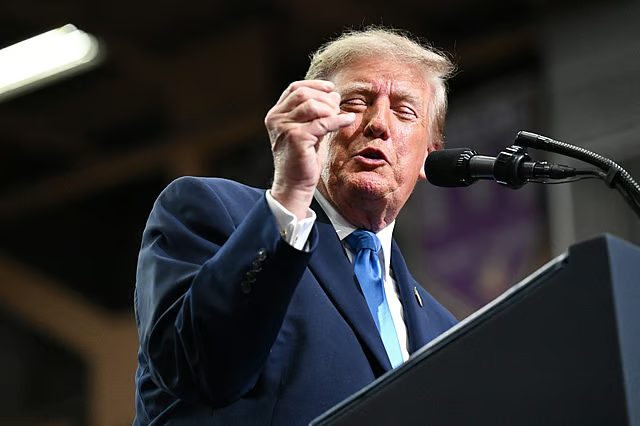
DUBAI, Oct. 4, 2026 — U.S. President Donald Trump warned that Washington will settle its standoff with Tehran either “the easy way or the hard way,” as heightened regional conflict forces Gulf states to reshape energy logistics and reinforce defensive perimeters.
Addressing supporters at a rally in Vandalia, Ohio, Trump declined to elaborate on specific operational steps against Iran, stating only that a resolution would come under terms dictated by Washington. The remarks came as regional governments braced for further disruption to critical maritime passages and vital oil infrastructure.
In Tehran, Iranian President Masoud Pezeshkian confirmed that his administration has implemented a revised economic framework designed to absorb the fallout from tightening sanctions and military tensions. Pezeshkian told state media that the measures aim to shield domestic supply lines and stabilize state finances in the face of sustained external pressure.


The commercial strain across regional waterways has already altered critical export patterns. In a rare strategic shift, the Iraqi Oil Tankers Company chartered a very large crude carrier (VLCC) to deliver 2 million barrels of crude past the Strait of Hormuz. Iraqi officials confirmed the move as the state-owned carrier’s first long-haul commercial voyage beyond the waterway in decades, giving Baghdad direct access to open-sea buyers after maritime risks choked domestic loadings.

Diplomatic efforts to assess the fallout are underway. U.S. Senator Chris Murphy landed in Doha on Sunday on a regional tour that includes stops in Saudi Arabia. Murphy, the first Democratic lawmaker to tour the Gulf since the latest military escalation, said his objective is to survey structural damage to American assets, consult regional mediators on potential ceasefire avenues, and evaluate Washington’s strategic footprint across the Gulf.
Security risks remain acute. Yemen’s Iran-aligned Houthi group claimed responsibility for launching ballistic missiles and drones at a Saudi Aramco installation in Riyadh on Saturday, asserting the strike was retaliation for coalition raids. While Aramco did not issue an operational update, witnesses reported seeing smoke near company facilities on the capital’s outskirts.
The cross-border salvoes also triggered civilian casualties further south. Saudi civil defense authorities confirmed that falling shrapnel from an intercepted ballistic missile in Ahad Rafidah, located in the southwestern Asir province, injured an Asian expatriate and damaged several vehicles alongside a local prayer hall.