

As Washington demands major uranium enrichment rollbacks, the US president questions who governs Tehran following leadership decapitation strikes.
SPARROWS POINT, Maryland — President Donald Trump declared that the United States is moving to wrap up its military conflict with Iran, warning that Washington will soon determine whether to conclude hostilities through a diplomatic settlement or severe military escalation.
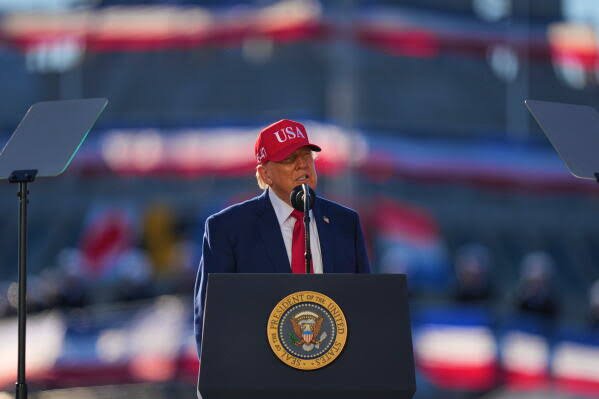
Speaking Tuesday at an Anduril Industries event at Sparrows Point, Maryland, Trump claimed American and allied operations have dismantled Tehran’s conventional military reach.
“We’re doing extremely well in the Islamic Republic of Iran, very well. They have no military. It’s shot; the whole place is shot,” Trump said. “They were the bully of the Middle East. They’re not so much the bully anymore, but we have to finish up. And it’s only a question of which way do we want to do it, the nice way or the not-so-nice way? And pretty soon you’ll find out.”



The remarks follow earlier statements outside the White House, where Trump characterized the pending resolution as a choice between “the easy way or the hard way”.
Before boarding Marine One in Washington earlier in the day, Trump openly questioned the clarity of Tehran’s chain of command after successive waves of targeted strikes removed top civilian and military figures.
“Their leaders are gone, their second group of leaders are gone, and the biggest problem I have is nobody knows who the hell is running the country,” Trump told reporters.
The US-Israeli offensive against Iran, now entering its eighth month, began in late February 2026. Supreme Leader Ayatollah Ali Khamenei was killed in the opening phase, while his designated successor, Mojtaba Khamenei, sustained severe injuries in the same strike and has remained out of public view. Follow-on strikes systematically targeted Iranian command nodes and senior generals.

Tehran rejected Trump’s characterization. Iranian Foreign Ministry spokesperson Esmaeil Baghaei said Washington understands Iran’s constitutional institutions and decision-making apparatus. He placed responsibility for stalled negotiations on “contradictory positions and mixed messaging from US officials.”
Iranian President Masoud Pezeshkian has described negotiations as pointless while US-Israeli strikes persist and a US Central Command naval blockade chokes off commercial traffic through the Strait of Hormuz.
The economic fallout from the maritime standoff has disrupted international energy corridors, driving crude prices higher and creating domestic political headwinds for the White House weeks before US midterm elections. Trump downplayed the financial strain, calling elevated fuel prices a necessary cost to curb Iran’s regional threat and promising costs would drop steeply once the war ends.
In Maryland, Trump joined defense technology firm Anduril to unveil Arsenal-2, a 2-million-square-foot, software-defined manufacturing shipyard at Tradepoint Atlantic. Backed by a $3.7 billion private capital commitment as part of an overall $6.6 billion public-private push with the US Navy, the facility is designed to accelerate production of Virginia-class nuclear attack submarines.
Diplomatic terms remain deadlocked. Vice President JD Vance said Tuesday evening that Iran must commit to a “meaningful” and “significant” dismantling of its uranium enrichment capacity before Washington agrees to a ceasefire. While administration officials have previously claimed Iran’s primary enrichment facilities were crippled, Vance’s demands underscore lingering intelligence concerns over heavily fortified underground cascades and surviving fissile stockpiles.
Both sides have exchanged diplomatic terms aimed at halting attacks and reopening the Strait of Hormuz, but Trump recently dismissed Tehran’s seven-point proposal as insufficient.