

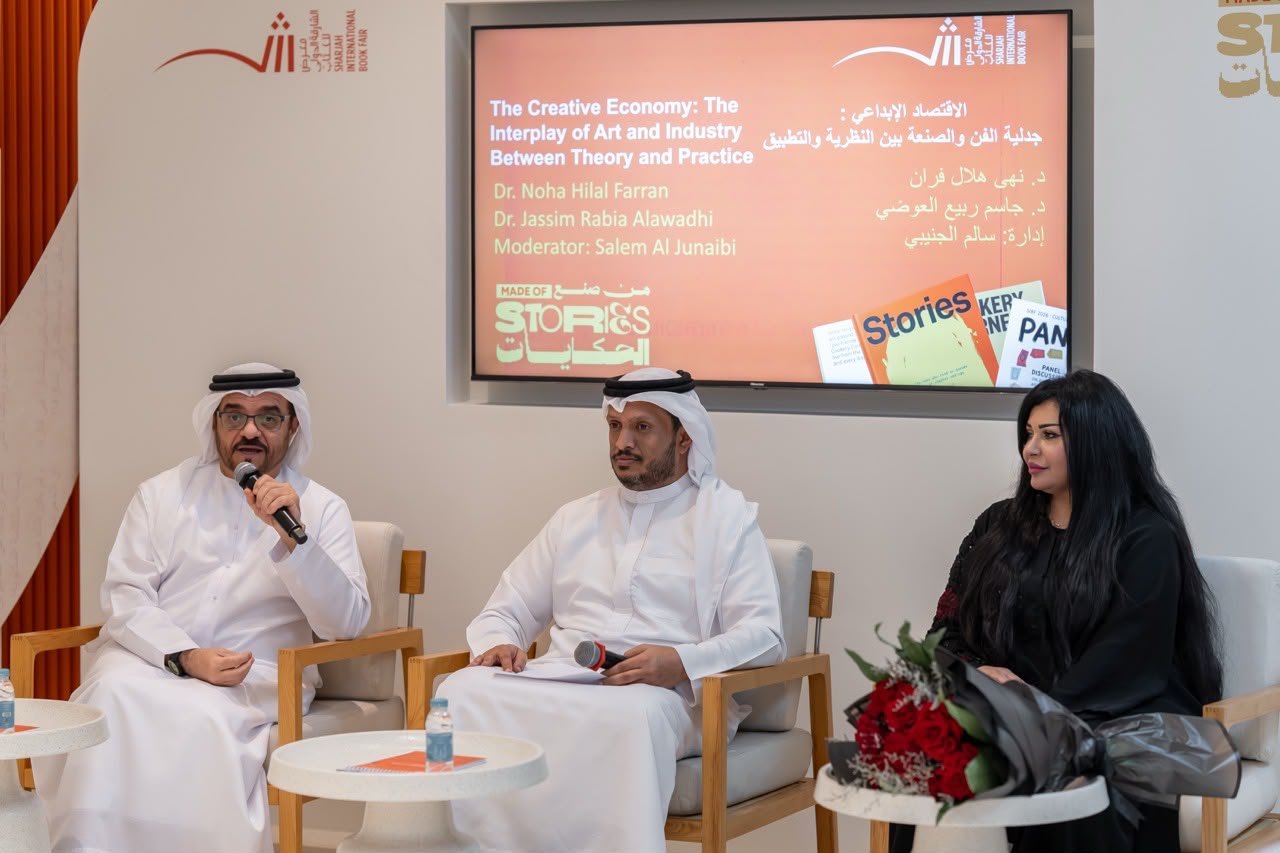
At the 45th Sharjah International Book Fair, panellists examine how creativity can generate economic opportunities while cultural institutions safeguard the UAE’s artistic heritage
Sharjah, November 6, 2026 : How can artistic creativity become an economic resource without reducing art to a commercial commodity? And how did the individual efforts of pioneering artists evolve into the UAE’s growing cultural and creative industries?

These questions were at the centre of a discussion at the 45th Sharjah International Book Fair (SIBF 2026), where researcher and art historian Dr. Nuha Hilal Farran and artist and writer Jassim Rabie Al Awadhi explored the relationship between art, industry and economic development, drawing on the UAE’s cultural transformation.


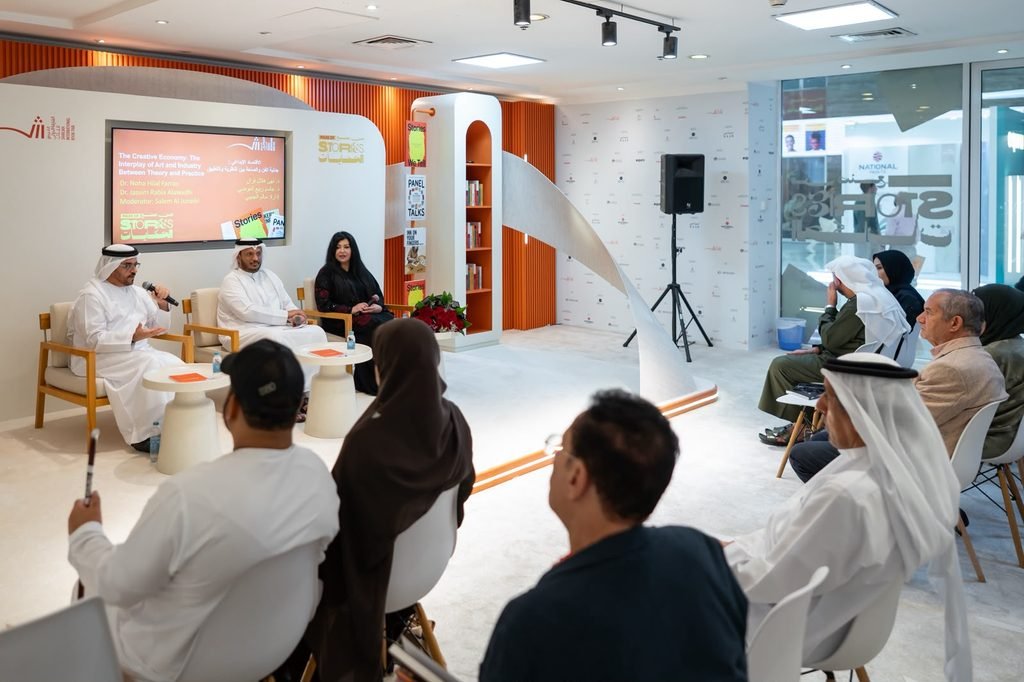
The session, titled ‘The Creative Economy: The Dialectic of Art and Industry Between Theory and Practice – The UAE Experience as a Model’, followed a signing ceremony for Farran’s book of the same name. It was moderated by artist and writer Salem Al Junaibi, founder of the Thinking Art Foundation for Publishing, Culture and Education.
Turning creativity into economic value
Dr Nuha Hilal Farran, founder of Aswar Arts Centre, argued that creativity is an economic resource capable of generating employment, supporting industries and contributing to development. Art, she explained, is no longer limited to aesthetic expression but also strengthens national identity and connects knowledge, imagination and production.
Drawing on her book, Farran examined how artistic talent can become productive economic activity without compromising the cultural and human values that give art its significance. She presented the UAE as a model for understanding how culture, identity, innovation and investment in people can contribute to economic development.
For Farran, the creative economy is not about turning every artwork into a commodity. Rather, it involves recognising creativity as a productive resource, culture as a developmental asset and identity as a foundation for innovation and sustainability.

She highlighted the role of cultural policies, specialised institutions, governance and legislation in supporting creative industries, alongside intellectual property protection, creators’ rights and investment in young talent. She also discussed how cultural diplomacy, major projects and awards strengthen the UAE’s international presence.
Addressing digital transformation, Farran noted that technological advances are creating new opportunities and challenges for creative production, making it increasingly important to balance commercial demands with cultural identity and artistic value.
From individual initiatives to cultural institutions
Artist and writer Jassim Rabie Al Awadhi, a pioneer of the UAE’s art and photography movements, offered a historical perspective on this transformation, recalling how individual artists and photographers helped establish the country’s early artistic landscape.
He traced the development of these efforts into specialised institutions, exhibitions and cultural programmes that have created a more structured environment for artistic production. This evolution, he explained, reflects the accumulated contributions of successive generations whose experiences laid the foundations for today’s creative sector.
Al Awadhi also stressed the importance of documenting the experiences of these pioneers, describing their contributions as an essential part of the UAE’s cultural memory and a valuable reference for understanding the sector’s development.
Preserving this heritage, he noted, helps connect the achievements of earlier generations with emerging opportunities in the creative economy, ensuring that future progress remains informed by the artistic experiences on which the sector was built.
The discussion brought together two complementary perspectives: the economic potential of creativity and the importance of preserving the cultural heritage, artistic identity and institutional knowledge that support the continued development of the UAE’s creative industries.