


Tehran/Washington, April 7, 2026:
Tensions in the Middle East have intensified sharply as the ongoing conflict involving Iran, the United States, and Israel approaches a critical turning point, with global attention focused on a possible ceasefire or further escalation.
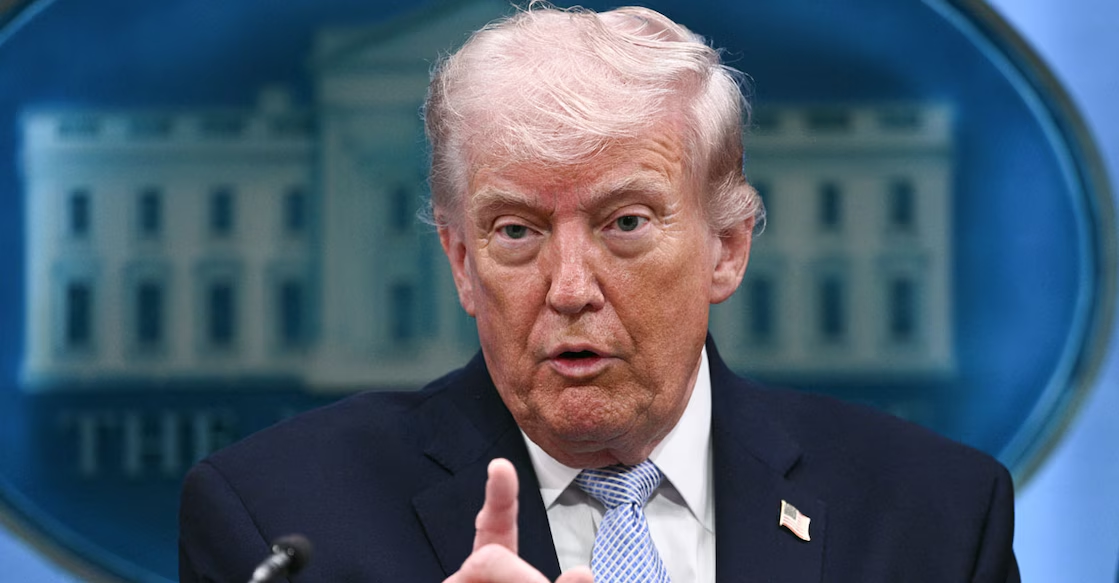
A deadline set by U.S. President Donald Trump for Iran to reopen the strategically vital Strait of Hormuz is fast approaching. The United States has warned that failure to comply could lead to large-scale military strikes targeting Iranian infrastructure, including power plants and transport networks.
Ceasefire Efforts Face Uncertainty
Diplomatic efforts are underway to prevent further escalation, with mediators such as Pakistan, Egypt, and Turkey pushing for a 45-day ceasefire. However, negotiations remain fragile, with both sides holding firm positions.


Iran has submitted a 10-point proposal aimed at ending the conflict permanently, but U.S. officials have described the plan as insufficient. While Washington acknowledged it as a “significant step,” no agreement has yet been reached.
Escalating Military Actions
The conflict has seen intensified military activity in recent days. Reports indicate that joint U.S.-Israeli strikes have targeted key Iranian facilities, while Iran has responded with missile attacks aimed at Israel and parts of the Gulf region.

Regional tensions have expanded beyond the immediate conflict zone, with incidents reported in Iraq, Syria, and near Gulf energy installations, raising fears of a wider regional war.

Global Economic Impact
The crisis is already affecting global markets. Oil prices have surged significantly due to disruptions and fears over shipping through the Strait of Hormuz, a critical route for global energy supplies.
Analysts warn that prolonged instability could lead to further spikes in fuel prices and impact global economic growth, adding to inflation concerns worldwide.
High Stakes Ahead
Despite ongoing diplomatic efforts, the situation remains volatile. Iran has warned of “devastating retaliation” if further attacks are carried out, while the United States has signaled readiness for decisive military action if its demands are not met.
With the deadline looming, the coming hours are seen as crucial in determining whether the region moves toward a ceasefire or deeper conflict.