


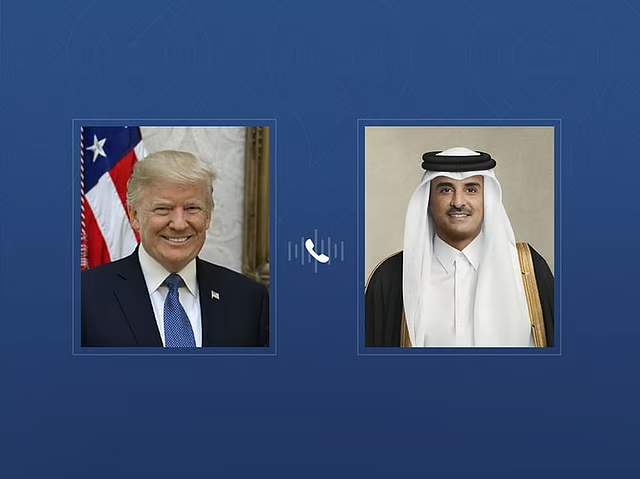
Strategic Waterways and Maritime Safety Top Agenda in High-Level Phone Call
DOHA: His Highness Sheikh Tamim bin Hamad Al Thani, the Emir of Qatar, received a high-profile telephone call from United States President Donald Trump on Wednesday. The two leaders engaged in detailed discussions regarding the latest political and security developments in the Middle East, focusing heavily on regional stabilization and international de-escalation efforts.

According to official state media reports from the Qatar News Agency (QNA), the diplomatic exchange highlighted the urgent need to defuse rising regional tensions through active dialogue.

Prioritizing Diplomacy Over Conflict
During the conversation, Sheikh Tamim emphasized Qatar’s steadfast position on regional conflicts, urging all involved entities to prioritize political and diplomatic solutions. The Emir stressed that structured dialogue remains the only viable path to strengthening regional security, establishing long-term stability, and preventing any further escalations that could jeopardize the volatile region.


“Prioritizing political and diplomatic solutions and dialogue between all parties is essential to strengthen regional security and prevent further escalation.” — His Highness Sheikh Tamim bin Hamad Al Thani
Safeguarding Maritime Routes and Global Energy
A significant portion of the diplomatic call was dedicated to global economic security. In light of recent geopolitical friction points, President Trump and the Qatari Emir jointly underscored the critical importance of:
- Safeguarding maritime navigation across highly contested international waters.
- Ensuring the strict security of strategic waterways, which serve as the lifelines for international commerce.
- Maintaining the unhindered flow of global supply chains, with a specific focus on international energy sectors.
Given Qatar’s position as a premier global supplier of liquefied natural gas (LNG) and the United States’ strategic interests in Middle Eastern stability, both leaders reaffirmed their commitment to keeping transit routes secure from external disruptions. The leaders concluded the call by validating the necessity of ongoing bilateral dialogue to address and resolve current international challenges.