


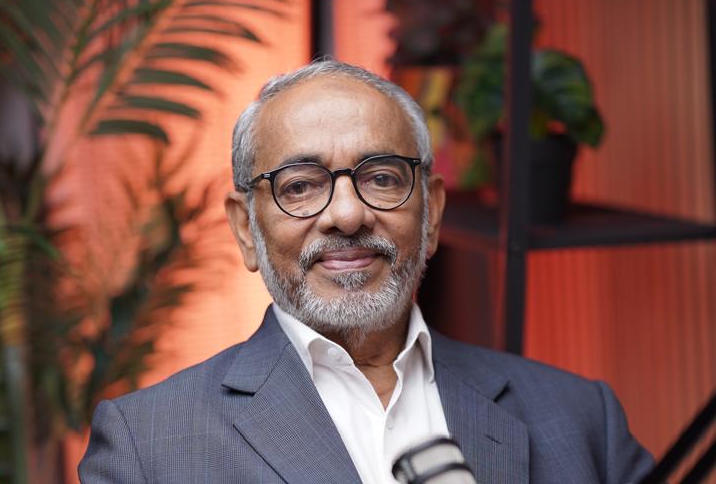
Renowned financial expert presents a comprehensive memorandum to the Chief Minister, proposing state-backed mutual funds, agricultural value addition, and an UAE-style academic hub.
DUBAI: Eminent financial literacy activist and NRI economic advisor K.V. Shamsudheen has submitted a comprehensive memorandum to Kerala Chief Minister V.D. Satheesan, urging the newly formed United Democratic Front (UDF) government to strategically channel non-resident Indian (NRI) remittances into productive sectors. The proposal outlines a roadmap to transform Kerala’s consumerist economy into a manufacturing, tourism, and knowledge hub by effectively utilizing the immense wealth and expertise of the global Malayali diaspora.
Shamsudheen, who has spent over 55 years as an expatriate in the UAE, emphasized the urgent need to shift NRI habits from non-productive spending to structured investing. While India leads global inward remittances—recording over $137 billion annually from 35.4 million non-resident Indians—expatriate Malayalis alone funnel approximately ₹2.3 to ₹2.5 lakh crore into Kerala each year. Despite accounting for nearly 20% of India’s total remittances, studies show that a major chunk of this capital is spent on luxury consumption, real estate, and weddings rather than asset-creating industries.


To counter this, Shamsudheen proposed that the state-owned Cheraman Asset Management Joint Stock Company launch dedicated mutual funds for expatriates. This framework would allow NRIs to systematically build wealth via Systematic Investment Plans (SIPs) during their working years and secure a steady post-retirement monthly income back home through Systematic Withdrawal Plans (SWPs). He noted that his decades of financial literacy campaigns in the GCC have already helped thousands of expatriates accumulate significant corpuses using similar structured instruments.


The memorandum highlights a major systemic paradox: while Kerala receives staggering inward wealth, it suffers from a massive internal cash outflow as thousands of crores are sent to other Indian states by migrant laborers who fill local blue-collar roles. To balance this, Shamsudheen urged the government to focus on high-tech manufacturing, noting that Kerala’s female workforce is exceptionally skilled in precision industries, making the state an ideal destination for advanced electronic hardware manufacturing.
Furthermore, the advisor recommended a sweeping overhaul of Kerala’s agricultural, tourism, and education policies. He advised the state to replicate the UAE’s successful economic models by setting up world-class academic cities to transform Kerala into a global educational and medical tourism hub. Expressing immense confidence in Chief Minister V.D. Satheesan’s forward-looking vision frequently shared during his Gulf visits, Shamsudheen requested the CM to forward the proposal to the Ministers of Education, Tourism, Health, Agriculture, and Industry for immediate implementation.
The structural resilience of Kerala’s economy has historically been anchored by the “Gulf Boom” and global migration, making its remittance-to-GDP ratio one of the highest in the world. However, economists have long warned against the state’s extreme dependence on consumption-driven growth and its vulnerability to geopolitical shifts in the Middle East. With the global landscape shifting rapidly in 2026, transitioning from a remittance-dependent model to a self-sustaining, production-oriented economy remains Kerala’s single biggest fiscal challenge.