


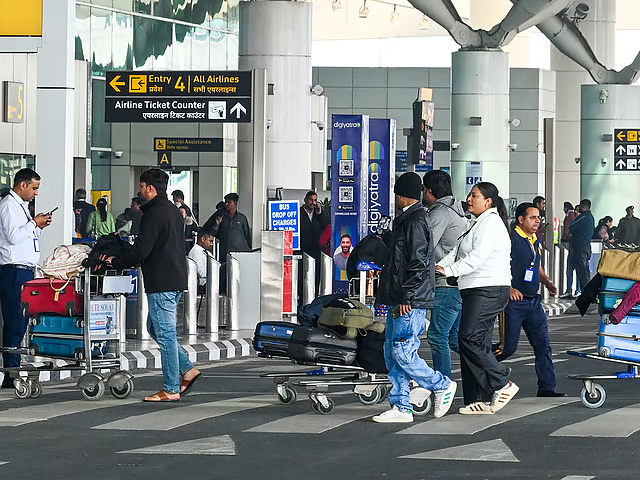
Indian expats and all international passengers heading to India must submit a digital health declaration form prior to boarding as health authorities step up airport screening measures.
DUBAI: Indian expatriates and international passengers travelling from the UAE and other global destinations to India must now fill out and submit a mandatory digital health declaration form before boarding their flights. The directive comes as India significantly steps up its health screening protocols at international airports to prevent the potential entry and spread of the Ebola virus.

According to recent travel updates reported by Gulf News, the measure applies strictly to all inbound international travelers, including the massive community of Indian expats residing in the Gulf region. Airlines have been instructed to verify the submission of the digital health declaration before issuing boarding passes to passengers bound for any Indian airport.


The digital health portal requires travelers to log their personal information, recent travel history, and current health status, specifically filtering for symptoms related to infectious diseases. This protocol aims to streamline the screening process on arrival and ensure that individuals coming from or transitioning through high-risk zones are easily identifiable by medical desks at Indian portals.

Airport authorities across India have simultaneously enhanced physical screening mechanisms, installing thermal scanners and setting up dedicated health counters. Passengers are advised to factor in additional time at departure airports in the UAE to complete the necessary digital paperwork seamlessly before their scheduled flights.
Ebola Screening Measures at International Gateways: Ebola virus disease is a severe, often fatal illness in humans if left untreated. India’s proactive reintroduction of health declaration protocols mirrors previous successful containment strategies used during international outbreaks of infectious diseases. By digitizing passenger travel logs prior to boarding, border health organizations can effectively track, trace, and isolate potential vectors, minimizing the risk of local transmission in densely populated regions.