


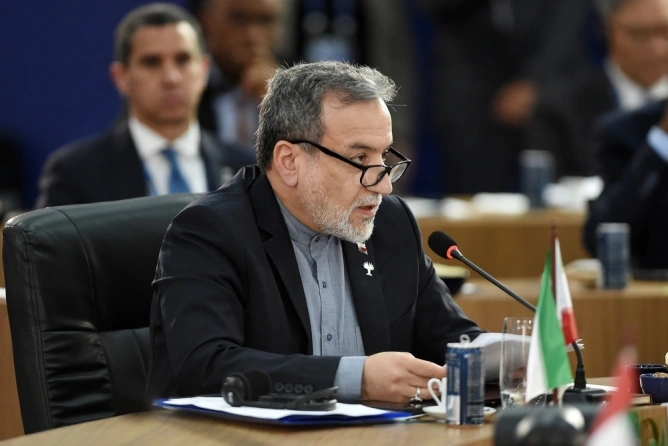
Foreign Minister Abbas Araghchi declares Tehran solely responsible for maritime operations and security in the critical energy chokepoint.
DUBAI: Iranian Foreign Minister Abbas Araghchi announced that the Strait of Hormuz will be under the exclusive management and full oversight of the Islamic Republic of Iran for the next 30 days. Emphasizing a zero-tolerance policy for external interference, Araghchi made it clear that Tehran will tolerate no foreign military or political intervention within the strategic maritime passageway during this period.

The declaration marks an assertive escalation in regional maritime governance, positioning Iran as the definitive authority over one of the world’s most critical energy transit routes. According to Foreign Minister Araghchi, all operational logistics, transit regulations, and security protocols within the strait will fall squarely under Tehran’s unilateral command for the upcoming month.



“The day-to-day operations and comprehensive security of the Strait of Hormuz are entirely the responsibility of Iran,” Araghchi stated, signaling a firm stance against Western and regional adversaries. The timing of the move raises immediate concerns across global shipping channels, as the strait serves as the primary gateway for a significant portion of the world’s crude oil supply.
Regional defense analysts suggest that the 30-day mandate is intended as a tactical warning to foreign naval forces, particularly those of the United States and its allies operating in the Persian Gulf. By formalizing this temporary window of absolute control, Tehran is attempting to draw a strict line against international naval patrols and potential espionage.
Shipping conglomerates and maritime security agencies are currently monitoring the situation for potential disruptions to international trade. While Iran insists the measure is to consolidate regional security under local stewardship, international observers fear it could heighten friction in an already volatile geopolitical climate.
The Strategic Importance of the Strait of Hormuz: The Strait of Hormuz is a vital geographical chokepoint separating the Persian Gulf and the Gulf of Oman. As the world’s most critical oil transit artery, approximately one-fifth of global petroleum consumption passes through its waters daily. Under international maritime law, the strait remains a contested zone of jurisdiction, frequently serving as a geopolitical lever for Tehran during periods of heightened diplomatic tension with Western powers.