


The tech giant introduces facial biometric recovery to help locked-out users regain access while utilizing liveness checks to counter AI deepfakes.
MOUNTAIN VIEW, Calif. — July 24, 2026:Google has launched a selfie video authentication tool for account recovery, offering personal Google Account holders a biometric alternative when locked out of their profiles or separated from trusted devices.
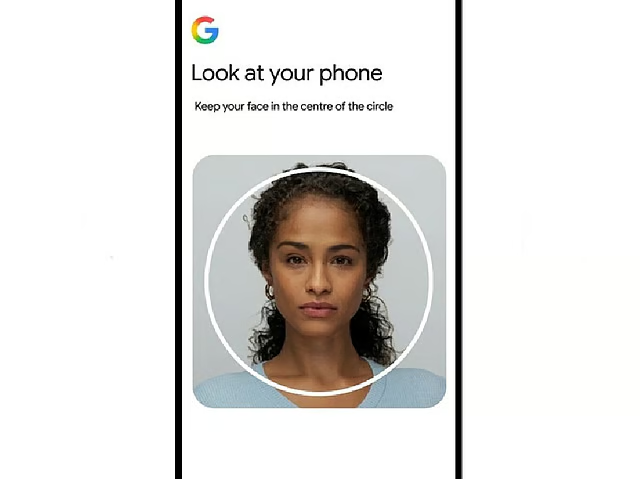
The mountain View-based technology giant announced on Thursday that eligible users can now record a short video clip of themselves as an opt-in backup verification method. The feature is designed primarily for emergency scenarios—such as lost mobile phones, forgotten credentials, or inaccessible secondary recovery channels—rather than serving as a routine daily login system.


To enroll, users navigate to their Google Account security settings and record a brief camera clip, following on-screen prompts to complete simple head movements. The guided tilts and turns capture facial contours from multiple angles to create an encrypted reference baseline. Should a user subsequently get locked out, they can submit a fresh selfie video. Google’s verification algorithms then compare the live capture against the saved baseline to restore access.


Cybersecurity engineers engineered the head-movement requirements specifically to establish “liveness” and thwart spoofing tactics. The system uses multi-layered detection to ensure submitted videos originate from a live person rather than static photographs, recorded playback, or artificial intelligence-generated deepfakes.
Addressing privacy considerations surrounding biometric data, Google emphasized that reference videos are encrypted at rest and remain under complete user control. Account holders retain the ability to delete saved videos at any time through their security dashboard. Google confirmed that the recorded data is strictly used for authentication unless users explicitly opt into sharing anonymous biometric data for broader product research and facial recognition improvements.
The selfie video feature is restricted to standard personal Google Accounts. It is not available for enterprise Google Workspace accounts, managed children’s accounts, or high-security profiles enrolled in the company’s Advanced Protection Program. Google also noted that users cannot enroll in the selfie video program while currently locked out; the setup must be completed prior to losing account access.
The rollout represents another incremental step in the tech industry’s multi-year effort to eliminate traditional passwords, which remain a primary vector for credential theft and phishing attacks. Having made passkeys the default sign-in standard in 2023, Google’s inclusion of facial biometric recovery aligns with broader moves across Microsoft, Apple, and financial institutions toward hardware-bound and biometric identity checks.