


From Bollywood classics and Faiz’s poetry to K-pop beats and folk-metal, Gen Z protesters adopt creative forms of dissent as nationwide demonstrations press for systemic reform.
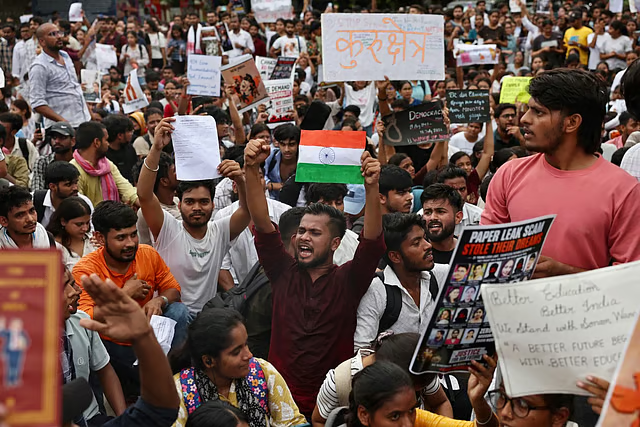
NEW DELHI:Across Indian cities, thousands of students have taken to the streets in sustained demonstrations following allegations of widespread irregularities and paper leaks in the National Eligibility cum Entrance Test (NEET). While traditional forms of agitation—marches, slogans, and sit-ins—remain central to the movement, young protesters are drawing widespread attention by integrating music, pop culture, cosplay, and viral digital media into their demonstrations.

Demonstrations have spanned major urban centers, including New Delhi, Mumbai, Chennai, Kochi, and Aizawl. At key gathering points such as Delhi’s Jantar Mantar, student gatherings have blended political demands with cultural expression. Protesters have utilized popular music compositions, folk-metal performances, and group chants to articulate their frustration over the conduct of national competitive examinations.


Cultural resistance has drawn on a diverse array of musical sources. Protesters in the national capital were joined by members of the Indian folk-metal group Bloodywood, known for addressing socio-political themes in their music. Crowds across various sites have frequently sung patriotic and activist compositions, ranging from A.R. Rahman’s Maa Tujhe Salaam to Faiz Ahmed Faiz’s historic poem Hum Dekhenge. Other popular tracks featured in demonstrations include Azadi from the film Gully Boy, Saadda Haq from Rockstar, and Sandese Aate Hain from Border.
In Aizawl, Mizoram, solidarity marches featured hundreds of students carrying umbrellas while singing Give Me Some Sunshine from the film 3 Idiots and the international pop single Where Is the Love? by the Black Eyed Peas. Meanwhile, short-form video content circulating on social media shows participants employing K-pop choreography and cosplay costumes, including Batman and Spider-Man suits, as methods of visual expression during public gatherings.
Beyond spontaneous musical performances, contemporary independent tracks have also emerged within the movement’s digital footprint. The recently released song Taare, by independent artists Farak, 10A, and Saswat Balan, has been widely shared across social media platforms to reflect the emotional strain and academic anxiety experienced by medical aspirants nationwide.
Despite police interventions, detentions, and the deployment of crowd-control measures in multiple states, student organizations maintain that demonstrations will continue until comprehensive administrative reforms, oversight mechanisms, and absolute transparency are established within the national examination framework.