

UAE airports remain operational while regional airlines adjust flights following drone strikes and expanding security warnings.
DUBAI — Gulf air corridors faced fresh disruptions on Friday after Iran launched drone and missile attacks against military facilities hosting United States forces in Bahrain, Kuwait, and Jordan, prompting regional carriers to adjust flight schedules and prompting several nations to issue heightened travel advisories.
The Islamic Revolutionary Guard Corps (IRGC) claimed responsibility for the offensive under “Operation Lightning” and “Operation Nasr 2,” targeting airbases, logistics infrastructure, and military barracks across the three host nations. Air defence systems in Kuwait and Jordan intercepted several incoming projectiles, while air raid sirens sounded in Bahrain. Explosions were also reported near Erbil International Airport in northern Iraq, where U.S.-led coalition troops are stationed.
The military strikes coincided with the 13th consecutive night of U.S. airstrikes inside Iran. U.S. Central Command (CENTCOM) confirmed it targeted Iranian military command centres, drone storage facilities, coastal surveillance networks, and maritime assets aimed at protecting commercial shipping routes. Iranian state media reported that four people were killed in Khuzestan province, with additional strikes hitting targets in Ahvaz, Bandar Abbas, and Gilan province.



Flight Cancellations and Travel Security
Despite regional airspace volatility, primary transport hubs in the United Arab Emirates—including Dubai International Airport (DXB) and Zayed International Airport in Abu Dhabi—continue to operate normally. However, regional connectivity has seen tactical adjustments.
Etihad Airways extended flight suspensions on selected routes between Abu Dhabi, Kuwait, and Bahrain. flydubai cancelled scheduled operations to Bahrain, while Qatar Airways suspended flights to Bahrain, Kuwait, and Erbil through the end of July.
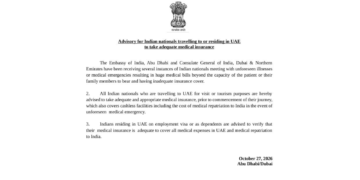
Consular authorities from the United States, United Kingdom, Canada, and Australia updated travel notices, warning citizens of unpredictable regional conditions. The U.S. Department of State maintained its Worldwide Caution advisory, urging citizens to remain vigilant.
Maritime Concerns and Ceasefire Stance
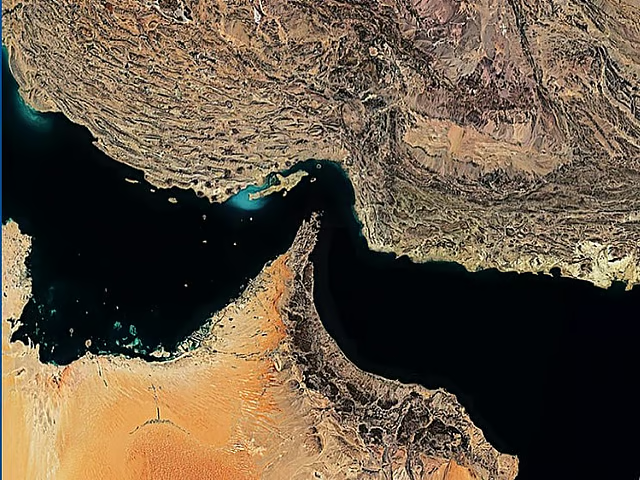
Tensions along key maritime arteries remain severe. Iranian Foreign Minister Abbas Araghchi formally rejected proposals for a temporary ceasefire, stating that Tehran will not enter negotiations until its core demands concerning navigation rights and security in the Strait of Hormuz are resolved.
At the United Nations, High Commissioner for Human Rights Volker Türk appealed for urgent international intervention to secure the evacuation of roughly 6,000 seafarers currently stranded aboard commercial vessels anchored near the Strait of Hormuz. UN Secretary-General António Guterres separately raised alarms regarding fresh attacks on Red Sea commercial oil tankers carried out by Yemen’s Houthi movement.

Diplomatic Engagements
Israeli Prime Minister Benjamin Netanyahu is scheduled to meet U.S. President Donald Trump at the White House on Tuesday to discuss strategy surrounding the Middle East conflict. President Trump indicated he was reviewing further operational steps while noting ongoing indirect communications with Tehran.
Civil aviation authorities across the Gulf advise all passengers traveling through the region to verify flight statuses directly with their respective airlines prior to airport departure.