


Washington plans to draw on seized Iranian funds to cover repair costs and cargo losses from maritime attacks in the Gulf, avoiding costs to American taxpayers.
WASHINGTON : US President Donald Trump announced that Washington will draw on frozen Iranian funds under American control to compensate for damages caused by recent attacks on commercial vessels in the Strait of Hormuz.
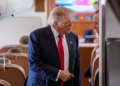
Speaking to reporters aboard Air Force One during a flight to Michigan, Trump said the measure ensures Tehran bears financial responsibility for maritime disruptions in the crucial shipping lane without burdening US taxpayers.


“We are going to use Iran’s money to pay for the damage they did,” Trump told reporters. “In other words, the Iran money that we control will be used to pay for damages.”

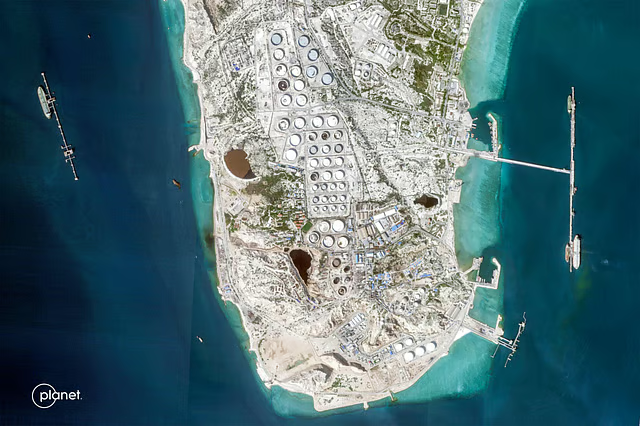
The announcement follows weeks of heightened tension across the Gulf, where attacks targeting commercial vessels have threatened international trade routes and rattled global energy markets. The Strait of Hormuz serves as a vital chokepoint through which roughly a fifth of the world’s petroleum passes.

Officials at the US Department of the Treasury are establishing the operational framework to implement the directive. Treasury Secretary Scott Bessent has been evaluating mechanism options since June, with teams assessing repair costs for damaged vessels, lost cargo, and wider economic impacts felt by regional allies.
Bessent previously noted that any financial tolls or levies attempted by Iranian authorities in the waterway would be directly offset against Iranian accounts held abroad.
The plan has drawn contrasting reactions in Washington and internationally. Proponents frame the policy as a direct form of accountability, utilizing seized funds to remedy losses caused by military action. Critics warn that liquidating or reallocating frozen Iranian assets could reduce diplomatic flexibility in future negotiations over regional security and nuclear proliferation.
Tehran strongly rejected the move. Iranian Foreign Minister Abbas Araghchi warned that seizing sovereign state assets sets a dangerous legal precedent that risks broader instability in international finance.
Billions of dollars in Iranian assets remain frozen across international bank accounts under long-standing US sanctions. While White House officials have not detailed the specific legal authority or exact dollar figure to be transferred, the Treasury Department recently froze over $130 million in digital assets linked to the Central Bank of Iran as part of expanded economic enforcement.
Naval traffic through the Strait of Hormuz remains under close surveillance by international maritime forces as shipping companies adjust transit routes amid shifting security assessments.