

Rescuers struggle to reach thousands missing across the Himalayan border region after catastrophic flash floods destroyed infrastructure and isolated remote villages.
KATHMANDU / BEIJING — August 29, 2026:Search and rescue operations across the Himalayan border region between Nepal and China faced critical delays on Saturday as secondary flooding risks threatened workers attempting to locate nearly 3,000 people missing after a glacial collapse triggered catastrophic flash floods.
The disaster, which struck midweek, sent a wall of water, ice, and debris tearing through river valleys on both sides of the international border. Official figures confirm at least 633 deaths, with 626 casualties reported in Nepal and seven confirmed dead in the Tibet Autonomous Region. Authorities fear the fatal total will rise sharply as emergency crews struggle to navigate cut-off terrain, severed communications, and destroyed roads.
Nepal’s National Disaster Risk Reduction and Management Authority reported 2,426 people out of contact within its borders. The missing list includes regional residents, foreign trekkers, and hundreds of Hindu pilgrims traveling along routes toward Mount Kailash. Among the missing are 933 workers employed at major infrastructure developments along the Trishuli River basin, where multiple hydroelectric stations suffered extensive structural damage.



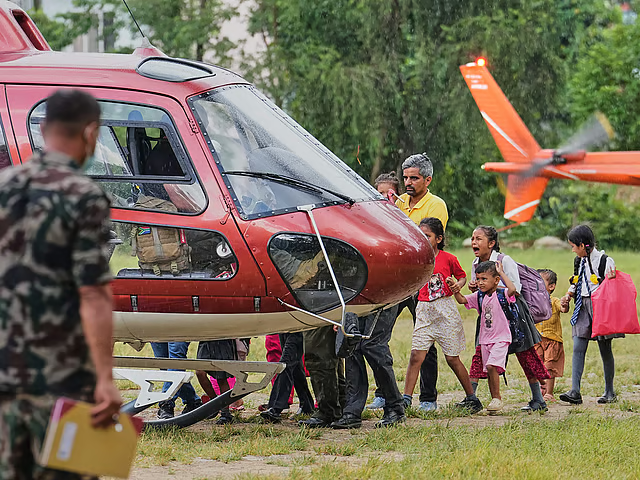
Search efforts were temporarily halted near the Trishuli 3A hydroelectric facility after local authorities issued warnings regarding a potential secondary dam breach upstream in Tibet. Nepali military personnel are working to extract more than 100 workers trapped inside subterranean tunnels at the plant, where mud and debris have blocked access points. Helicopters have airlifted approximately 350 personnel and residents from the immediate zone to safety.

In Tibet, Chinese authorities temporarily suspended operations in the hard-hit Gyirong county due to rising water levels before limited searches resumed early Saturday. Official state media reported 554 people remain missing in the region, while emergency services successfully evacuated over 1,000 stranded residents and tourists. Downstream in neighboring India, security personnel recovered seven bodies from river systems originating in Nepal, indicating that floodwaters have carried victims scores of kilometers from the initial impact zone.
Relief agencies warned that up to 93,000 people across the affected mountain corridors face severe shortages of clean water, food, and medical supplies as humanitarian organizations work to establish supply lines into isolated communities.