


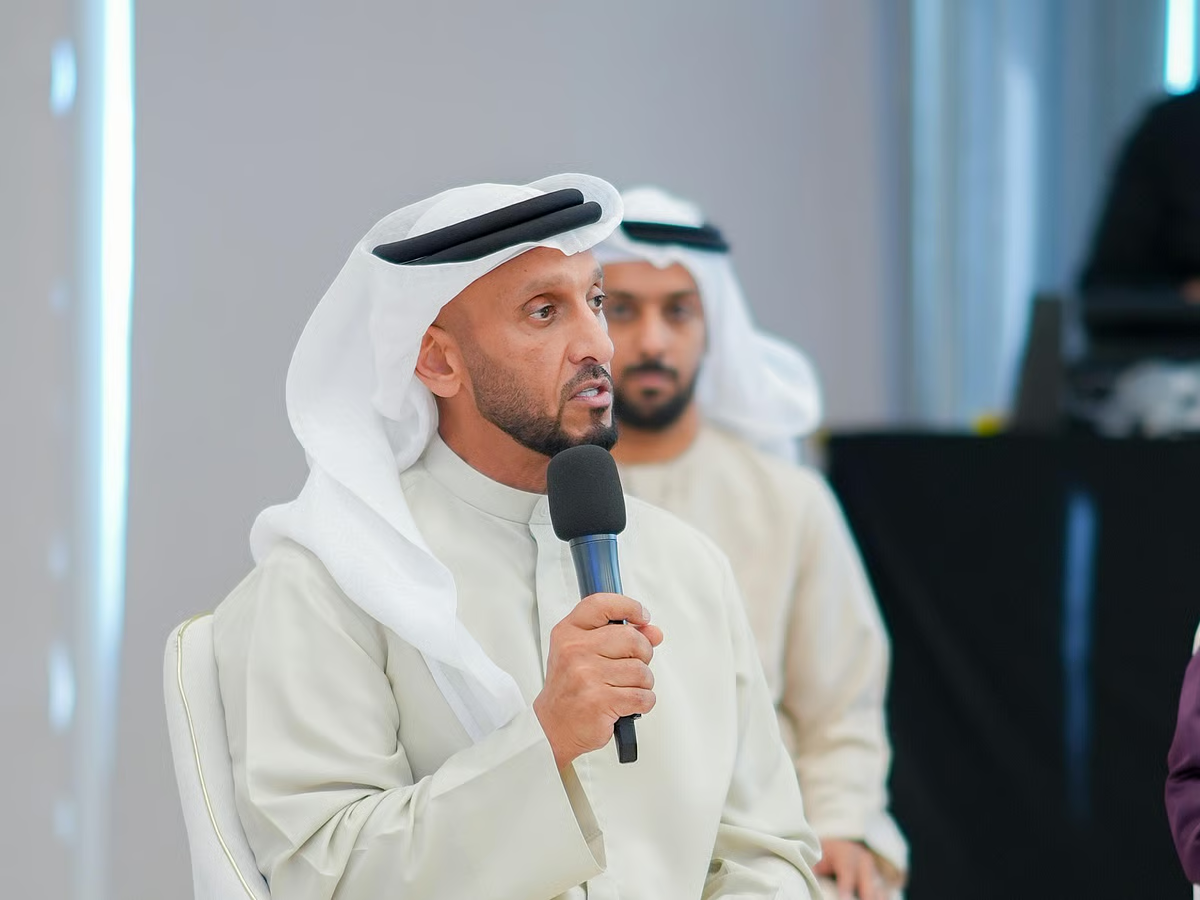
Dr Ali Rashid Al Nuaimi outlines the country’s security posture during regional escalations, balancing high-level defense operations with uninterrupted public life.
DUBAI, Oct 16 : The United Arab Emirates confronted covert espionage networks and internal sleeper cells that attempted to coordinate Iranian missile and drone strikes against the country earlier this year, a senior Emirati parliamentary leader said on Thursday.
Dr Ali Rashid Al Nuaimi, Chairman of the Defence, Interior and Foreign Affairs Committee at the Federal National Council (FNC), disclosed that regional threats extended well beyond incoming aerial projectiles. Addressing the UAE Correspondents’ Council in Dubai, Al Nuaimi stated that ground-based sleeper cells worked to identify critical infrastructure and feed coordinates to Iranian operational units.
Security services managed a multi-layered response during the height of the escalation, intercepting aerial threats while neutralizing internal espionage groups targeting sensitive installations across the country.



A central directive of the country’s crisis response was avoiding mass disruption. Civil authorities made a deliberate calculation to keep economic activity, commercial centers, dining districts, and public beaches operational while air defense and counter-intelligence protocols ran in parallel.
“The objective was clear: protect our people, secure key infrastructure, and ensure life moved forward without panic,” Al Nuaimi said, recalling a conversation with an Israeli contact who was stunned to learn that everyday life in Abu Dhabi—including shopping malls like The Galleria—remained normal while air defense systems monitored incoming vectors.
Al Nuaimi pointed out that the presence of diverse communities living together calmly during crises challenged regional preconceptions. Overseas visitors interacting directly with Emiratis and Arab residents, including Palestinians, often gain an entirely different perspective on regional stability and social cohesion.

Reflecting the UAE’s broader diplomatic doctrine, Al Nuaimi confirmed he held back-to-back meetings on Wednesday with separate Israeli and Palestinian delegations in an effort to sustain communication lines and identify common ground.
“Political divisions cannot be an excuse to abandon dialogue,” he said, emphasizing that regional stability hinges on shielding younger generations from cycles of unresolved conflict.
Security services across the Gulf Cooperation Council have long tracked regional sabotage apparatuses linked to Tehran and its proxy networks, including Lebanese Hezbollah. Bahrain and Qatar have previously dismantled espionage rings tasked with gathering tactical data on critical utility networks and military installations. The UAE’s own security agencies have repeatedly disrupted illicit intelligence operations directed against vital national interests.
Operational systems remain integrated across civilian protection networks. The National Emergency Crisis and Disaster Management Authority (NCEMA) maintains early warning systems configured to transmit localized alerts directly to mobile devices without triggering nationwide disruptions, ensuring immediate defense readiness alongside economic continuity.