

Police deploy extra patrols across key corridors to manage traffic flow as more than 1.27 million UAE students return to classrooms.
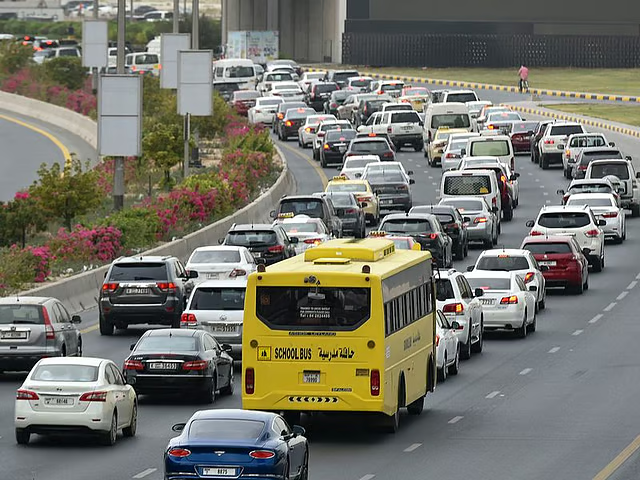
DUBAI, August 31, 2026:Commuters travelling from Sharjah to Dubai experienced heavy rush-hour traffic on Monday morning as more than 1.27 million students across the United Arab Emirates returned to school following the summer break.

Traffic ground to a crawl along major arterial highways connecting the two emirates, with congestion concentrating around Al Ittihad Road (E11) and Sheikh Mohammed bin Zayed Road (E311). The surge in morning vehicles follows the reopening of over 1,180 public and private schools nationwide, adding thousands of school buses and private vehicles to peak-hour routes.
Navigational data showed tailbacks on Al Ittihad Road stretching from Al Taawun and Sahara Centre through to the Al Nahda border area into Dubai. Concurrently, heavy congestion affected Sheikh Mohammed bin Zayed Road, particularly along the corridors passing Sharjah Industrial Area, Muhaisnah, and Al Qusais. Pockets of slow-moving traffic were also recorded around high-density school hubs in Muwaileh, Maleha Road, and Mleiha Street.


In response to the predictable traffic surge, Dubai Police and Sharjah Police activated dedicated back-to-school operational plans, deploying additional traffic patrols around major school zones, key intersections, and known bottleneck areas to maintain vehicle flow and enhance student safety.

Motorists seeking to bypass the primary bottlenecks found partial relief along Emirates Road (E611), which maintained smoother transit conditions following recent infrastructure expansions designed to handle regional traffic. Interior Dubai arterials, including routes through Mirdif, Al Warqa, Al Rashidiya, and Nad Al Hamar, also experienced heightened volume as traffic funneled toward central commercial districts.
Traffic authorities have urged drivers to adjust their daily routines during the initial days of the school term. Recommendations include departing earlier than standard travel times, consulting live navigation updates prior to starting trips, maintaining safe following distances, and avoiding sudden lane changes in high-density areas.