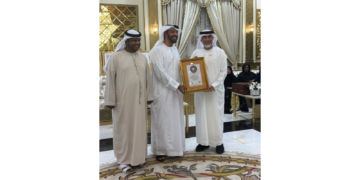


Led by the Environment Agency – Abu Dhabi, the digital platform links field rescue teams, veterinary centers, and community reporting to safeguard regional biodiversity.
ABU DHABI, Oct. 17, 2026 :The Environment Agency – Abu Dhabi on Saturday rolled out a unified digital network designed to expedite the rescue, clinical rehabilitation, and wild release of distressed marine and terrestrial wildlife across the emirate.

The initiative, titled the Abu Dhabi Wildlife Response Network, brings government departments, environmental non-profits, academic institutions, and private veterinary operators into a single operational framework. The announcement took place during an official gathering on Saadiyat Island, attended by conservation biologists, partner agencies, and volunteers involved in local rehabilitation programs.

Under the new mechanism, emergency calls logged by residents or field monitors trigger an immediate assessment pipeline. Once a report enters the digital portal, a designated dispatch unit deploys to stabilize the stranded or injured animal on site. Depending on the species and severity of trauma, subjects are transported to specialized marine or terrestrial clinical centers for treatment, diagnostics, and recovery monitoring.


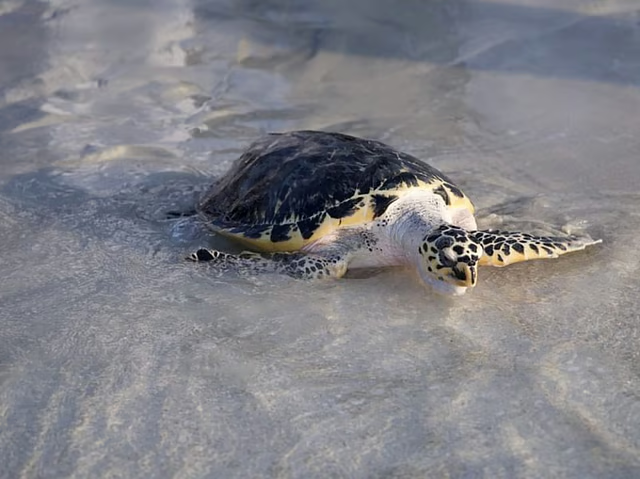
Following the announcement on Saadiyat Island, agency officials and volunteers released a cohort of fully rehabilitated sea turtles directly into the Arabian Gulf, illustrating the final operational stage of the care cycle.
The coordinated network builds upon an intervention framework established by the authority in 2016. What began as a targeted effort to rescue cold-stunned and boat-struck sea turtles has since grown to handle critical interventions for dugongs, sea snakes, dolphins, and migratory birds.
Maitha Mohamed Al Hameli, Acting Executive Director of Terrestrial and Marine Biodiversity at EAD, stressed that clinical outcomes depend on minimizing the time between public sightings and field deployment.
“Through this network, we are providing the care that injured or stranded animals need, giving them the best possible chance to recover and return to their natural habitats, and strengthening Abu Dhabi’s efforts to protect species and conserve biodiversity,” Al Hameli stated.
Beyond field operations, the platform functions as an empirical research registry. Every logged case will document biometrics, pathology, toxicology findings, and mortality causes. Environmental scientists will analyze this aggregated data to pinpoint emerging ecological pressures, habitat degradation patterns, and vessel-strike corridors along the coastline.
Looking ahead, EAD confirmed plans to integrate real-time satellite telemetry tracking for released specimens, expand structured technical training for first responders, and deepen cross-border wildlife emergency protocols. Public engagement campaigns will also be scaled up across coastal settlements to ensure residents recognize distress symptoms and report sightings accurately.