

US President Donald Trump calls terminal attack ‘not acceptable’ as civilian aviation authority confirms 309 injured and major carriers halt flights across Saudi Arabia
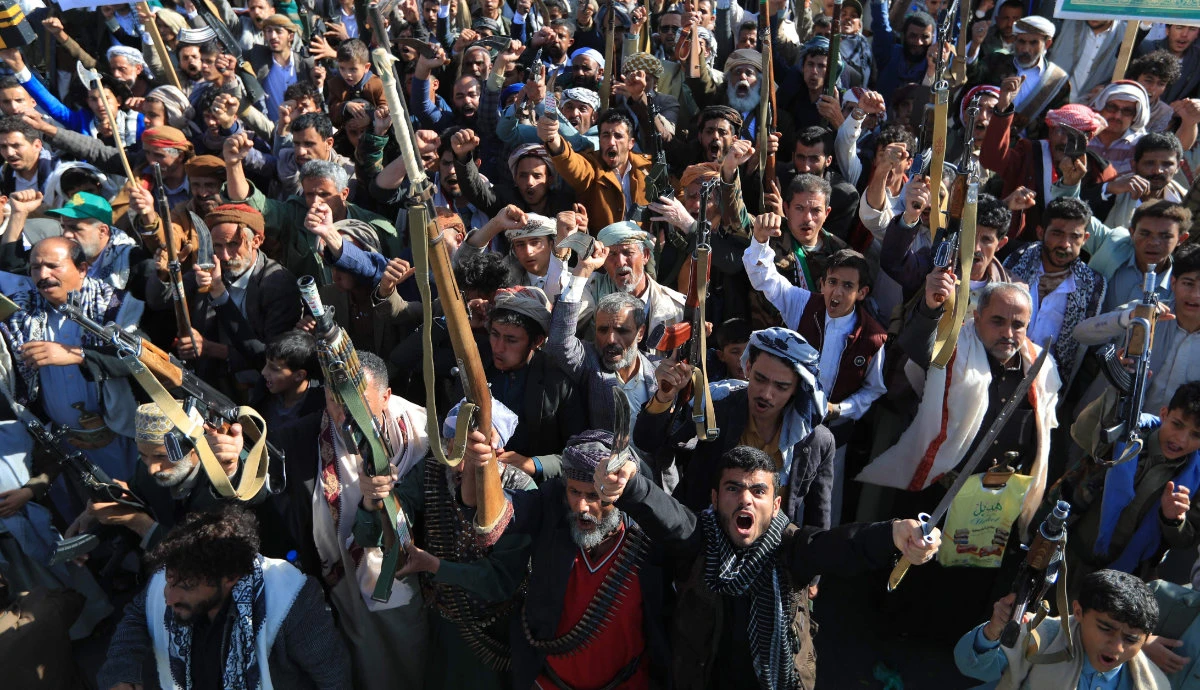
RIYADH, Saudi Arabia : The Saudi-led Coalition to Support Legitimacy in Yemen has warned of a decisive military response following a Houthi strike on Riyadh’s King Khalid International Airport that killed 12 people and wounded 309, drawing immediate international condemnation and triggering widespread flight disruptions across the Gulf.

The strike slammed into a passenger terminal on Saturday, marking one of the deadliest cross-border attacks on Saudi civilian infrastructure in years.
Maj. Gen. Turki Al-Maliki, spokesperson for the coalition, characterized the assault as a full-fledged war crime under international humanitarian law. In an official dispatch carried by the Saudi Press Agency (SPA), Al-Maliki confirmed that the Joint Forces Command will deliver a firm, measured response in line with customary laws of armed conflict.


Casualty figures released early Sunday by the General Authority of Civil Aviation (GACA) underscored the international toll. Twelve people lost their lives, among them four Saudi citizens alongside nationals from the United States, Bangladesh, Egypt, Jordan, Palestine, Sudan, and Syria. Medical authorities reported that several of the 309 wounded remain in critical condition.
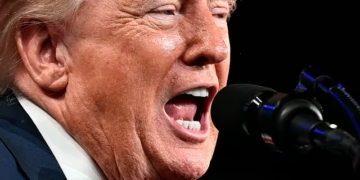
US President Donald Trump denounced the strike late Saturday, speaking to reporters at Joint Base Andrews before confirming plans to consult directly with Saudi Crown Prince Mohammed bin Salman.
“What happened in Saudi Arabia is not acceptable,” Trump said.

US Secretary of State Marco Rubio separately confirmed the death of an American citizen, demanding an immediate halt to missile and drone operations against civilian transit centers.
Civil aviation officials temporarily halted departures and arrivals at King Khalid International Airport to conduct safety assessments and structural inspections. Tracking data compiled by FlightAware showed at least 291 flights canceled in Riyadh over a 24-hour window. Global and regional carriers, including Air India, FlyDubai, Lufthansa Group, and Pakistan International Airlines, suspended operations into key Saudi gateways.
Hours after the explosion in Riyadh, coalition air defenses tracked further aerial threats across the Kingdom. A projectile landed near King Fahd International Airport in Dammam, while a separate ballistic missile was intercepted over the Al-Kharj governorate south of the capital, Al-Maliki confirmed.
The European Union Aviation Safety Agency broadened its flight advisory for Saudi airspace on Sunday, cautioning that deep-strike capabilities and repeated interceptions elevate the risk of civil aircraft misidentification.
Diplomatic pressure shifted quickly to the United Nations. Yemen’s internationally recognized government dispatched a formal letter to UN Secretary-General António Guterres and the UN Security Council, citing Saturday’s carnage and an earlier strike on Aden airport. The letter called for strict enforcement of the targeted arms embargo against Houthi leadership and renewed international accountability for assaults targeting civilian logistics and global shipping corridors.