


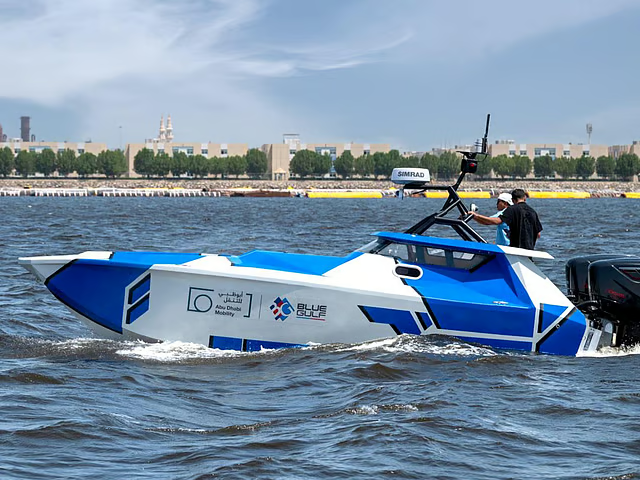
Authorities mandate permits, comprehensive insurance, and robust cybersecurity protocols for self-driving marine vessel testing.
DUBAI: The maritime sector in the UAE is witnessing a significant shift as Abu Dhabi officially introduces a new regulatory framework governing the testing of autonomous marine vessels. This policy places a renewed emphasis on safety, security, and operational accountability for technology firms operating within the capital’s waters.

The new directive stipulates that any organization wishing to conduct trials for self-driving boats must obtain a specialized permit from the relevant maritime authorities. This move aims to foster innovation while ensuring that advanced marine technology does not compromise the safety of existing commercial and recreational traffic.



Key provisions of the regulations focus heavily on risk mitigation. Companies are now required to provide proof of comprehensive insurance coverage, shielding against potential damages during the testing phase. Furthermore, in an era of increasing digital threats, the government has mandated strict cybersecurity protocols, ensuring that the navigation and control systems of these autonomous vessels cannot be compromised by external hacking attempts.
Industry experts view this policy as a logical evolution in the UAE’s broader strategy to lead the region in automated infrastructure. By establishing a clear legal path for autonomous boats, Abu Dhabi is positioning itself as a primary testing ground for maritime tech developers globally.
The UAE has rapidly accelerated its adoption of autonomous systems across various sectors, ranging from aerial delivery drones to autonomous road vehicles. In the maritime domain, the push for self-driving vessels aligns with the nation’s “Operation 300bn” and the broader economic vision to diversify into high-tech, knowledge-based industries, reducing dependency on traditional shipping and logistics methods.