

• NEWS MIDDLEEAST
  • UAEVARTHA
Thursday, August 6, 2026
UAE Vartha - English
Advertisement
  • UAE
    • Abu Dhabi
    • Dubai
    • Sharjah
    • Ajman
    • Ras Al Khaimah (RAK)
    • Fujairah
    • Umm Al Quwain (UAQ)
  • GCC
  • Kerala
  • India
  • News
    • Business
    • Politics
    • World
    • Science
  • Tech
  • Entertainment
  • Lifestyle
  • UAE
    • Abu Dhabi
    • Dubai
    • Sharjah
    • Ajman
    • Ras Al Khaimah (RAK)
    • Fujairah
    • Umm Al Quwain (UAQ)
  • GCC
  • Kerala
  • India
  • News
    • Business
    • Politics
    • World
    • Science
  • Tech
  • Entertainment
  • Lifestyle
UAE Vartha - English
  • Malayalam News
  • UAE
  • GCC
  • Kerala
  • India
  • News
  • Entertainment
  • Tech
  • Lifestyle
Home News Science

Ancient Star in Pictor II Reveals Secrets of Early Universe

Web Desk by Web Desk
March 23, 2026
in Science
0
Ancient Star in Pictor II Reveals Secrets of Early Universe
39
SHARES
112
VIEWS
Share on whatsappShare on Facebook

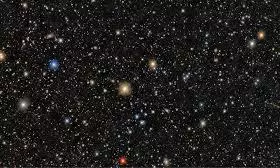
Astronomers have discovered one of the oldest known stars, PicII-503, in the dwarf galaxy Pictor II, offering a rare window into the early stages of the universe.

Located around 150,000 light-years from Earth, PicII-503 is classified as a second-generation (Population II) star, formed from material left behind by the universe’s first stars. The discovery provides crucial insights into how the earliest stellar generations influenced cosmic evolution.

According to findings published in Nature Astronomy on March 16, 2026, the star has an extremely low metal content, with iron levels just 1/40,000th that of the Sun. This makes it one of the most metal-poor stars ever identified outside the Milky Way.


Scientists believe such stars formed after the first-generation (Population III) stars ended in powerful supernova explosions, dispersing elements like carbon and iron into space. PicII-503’s chemical signature supports this theory, showing a carbon-to-iron ratio more than 1,500 times higher than that of the Sun.

The discovery was made under the MAGIC (Mapping the Ancient Galaxy in CaHK) project using the Dark Energy Camera mounted on the Víctor M. Blanco Telescope. Follow-up observations with the Very Large Telescope and the Baade Magellan Telescope confirmed its unusual chemical composition.

Lead researcher Anirudh Chiti of Stanford University noted that the star lies at the extreme boundary of what scientists thought possible. Researchers say the finding helps trace early chemical enrichment in faint dwarf galaxies, improving our understanding of how the first stars shaped the universe.


Tags: ancient star discoveryastronomy newsearly universemetal-poor starNature Astronomy studyPicII-503Pictor II galaxyPopulation II starspace discoveryStanford research
Web Desk

Web Desk

India News, Technology, Meta, Mark Zuckerberg, IT Ministry, Social Media Regulation
Tech

Meta Chief Mark Zuckerberg Apologizes to Indian Government Over Content Lapses and Platform Errors

Skyline of Dubai showcasing digital infrastructure and modern urban transport
Dubai

Dubai Ranks Second Globally in BCG Intelligent Cities Index 2026

National Center of Meteorology weather station symbol against a sunlit skyline in the UAE
Weather

UAE Temperature Crosses 51°C as Extreme Summer Heat Continues Across Country

The newly opened Al Asayel Bridge in Dubai showing multi-lane traffic flow towards Downtown Dubai
Travel

RTA Opens New Al Asayel Bridge, Slashing Travel Time Across Key Dubai Districts

UAE Vartha - English

© 2026 News Middle East. All Rights Reserved.

Navigate Site

  • NEWS MIDDLEEAST
  • UAEVARTHA

Follow Us

  • Malayalam News
  • UAE
    • Abu Dhabi
    • Dubai
    • Sharjah
    • Ajman
    • Fujairah
    • Umm Al Quwain (UAQ)
    • Ras Al Khaimah (RAK)
  • GCC
  • Kerala
  • India
  • News
    • Politics
    • Business
    • World
    • Science
  • Entertainment
    • Gaming
    • Music
    • Movie
    • Sports
  • Tech
    • Apps
    • Gear
    • Mobile
    • Startup
  • Lifestyle
    • Food
    • Fashion
    • Health
    • Travel

© 2026 News Middle East. All Rights Reserved.