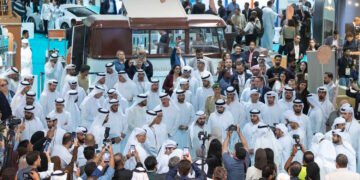


Dubai tourism official Dr Marwan Alzarouni tells Future Stage delegates that fragmented automation must give way to integrated data ecosystems uniting airlines, hotels, and destinations.
DUBAI, United Arab Emirates — September 14, 2026 :

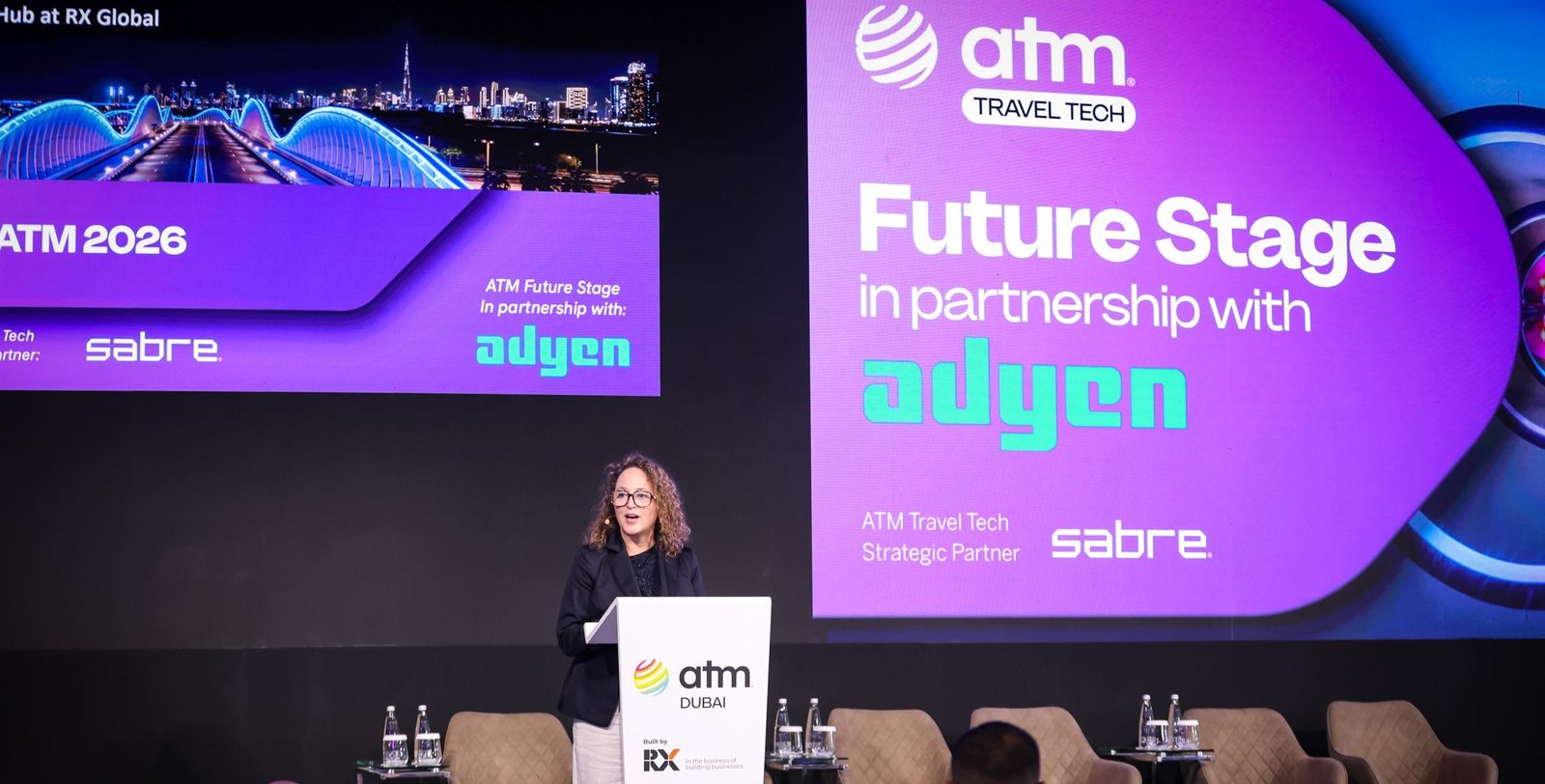
The Arabian Travel Market opened its dedicated Future Stage on Monday at the Dubai World Trade Centre, where global tourism authorities and technology providers gathered to examine how artificial intelligence is moving beyond basic customer service bots to overhaul foundational operational systems across the global travel industry.


Delivering the opening keynote under the banner “AI’s Real Role in Reshaping Travel,” Dr Marwan Alzarouni, Chief Executive of Artificial Intelligence at the Dubai Department of Economy and Tourism, cautioned that destination visibility now hinges directly on how autonomous algorithms process sector data.
Traditional search engine positioning alone no longer guarantees reach. With travelers turning to conversational platforms to plan, validate, and book journeys, destinations must verify that their data is machine-readable, verified, and continuously refreshed across disparate platforms.
“Standard search rankings are no longer enough,” Dr Alzarouni told attendees during the inaugural session. “As travelers increasingly rely on artificial intelligence for real-time answers, we must ensure Dubai is represented with accurate, reliable, and up-to-date data throughout the entire ecosystem. When visibility drops, we treat it as an issue of content quality and discoverability, rather than a backend software glitch.”
Alzarouni stressed that deploying isolated AI tools produces limited business gains. For real operational efficiency, automated frameworks must interconnect across municipal regulatory bodies, airport hubs, carrier fleets, hospitality properties, and technology vendors.
The discussions reflect an industry-wide pivot away from standalone consumer touchpoints toward structural integration. Rather than treating algorithmic processing as a marketing mechanism, operators are assessing how data models govern distribution, dynamic capacity management, and inter-organizational coordination.
Danielle Curtis, Exhibition Director ME for event organizer RX Global, noted that institutional priorities have evolved swiftly over recent cycles. The conversation is no longer about isolated customer interaction touchpoints, but about managing risk, data sovereignty, governance, and infrastructure resilience as algorithmic engines run core operational layers.

The Future Stage program forms the centerpiece of ATM Travel Tech, an expanded co-located exhibition spanning two exhibition halls and featuring more than 180 exhibitors from 30 countries. The accompanying 850-square-metre Tech & Innovation Hub is hosting live technology showcases covering spatial computing, green travel infrastructure, autonomous robotics, and cross-border payment protocols.
Monday’s schedule also addressed shifting traveler demographics. Sienna Parulis-Cook, Director of Marketing and Communications at Dragon Trail International, presented recent market data detailing outbound demand patterns across mainland China and strategic acquisition pathways for Gulf-based hospitality groups. Subsequent panels explored autonomous travel agents, algorithmic trip construction, and workforce adaptation in automated enterprise environments.
Running through September 17 under the overarching theme “Travel 2040: Exploring New Horizons Through Innovation and Technology,” the 33rd edition of Arabian Travel Market is staging strategic panels on regional capacity expansion, cyber defense, and transport decarbonization.