

UK maritime agency confirms vessel and crew are safe following incident near Khasab; US-Iran diplomatic talks set to open following halted military strikes
MUSCAT / WASHINGTON :An explosion was reported near a commercial oil tanker in the strategic waters off Oman’s coast on Sunday, maritime authorities said, occurring alongside high-stakes diplomatic efforts between regional powers and Washington to address shipping security and resolve broader conflict in the Strait of Hormuz.
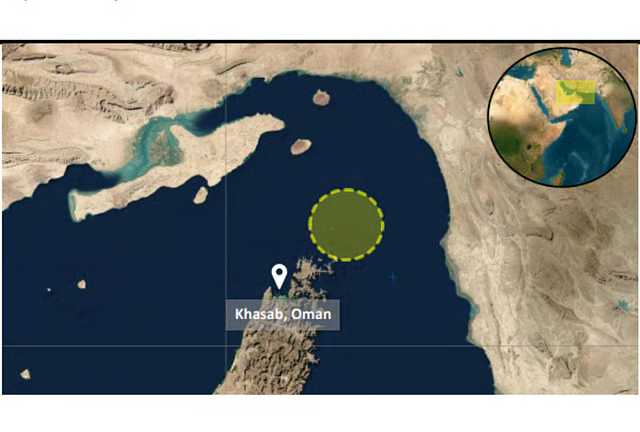
The United Kingdom Maritime Trade Operations (UKMTO) stated that the incident took place approximately 20 nautical miles northeast of the Omani port city of Khasab. The master of the vessel reported hearing a blast in close proximity, though both the ship and its crew members were confirmed safe. Maritime authorities have launched an investigation into the cause of the explosion, while advising all transiting vessels to exercise heightened caution and report suspicious activity.


The Marshall Islands-flagged oil products tanker Velos Amber (IMO: 9571038) was last tracked approaching the entrance of the Strait of Hormuz along the US-designated Omani shipping route before its Automatic Identification System (AIS) signal went offline. Iran’s state-run Islamic Republic News Agency (IRNA) published an image showing a tanker with its aft section ablaze, asserting it was tied to the incident, though maritime monitors could not independently verify the photograph.


The security scare coincided with an announcement from Iranian Foreign Minister Abbas Araghchi that bilateral discussions between Tehran and Muscat over the regulation of the Strait of Hormuz have reached their final stages. Briefing Iran’s Cabinet, Araghchi highlighted substantial progress in defining maritime arrangements through the strategic waterway.
Iranian Foreign Ministry spokesperson Esmaeil Baqaei further clarified on state television that both nations are finalizing a revised transit corridor. Baqaei noted that the prospective route aims to respect sovereign rights while safeguarding national security, though he emphasized that any bilateral accord with Muscat would not immediately lead to a full reopening of the waterway.
Vessel traffic through the Strait of Hormuz—a maritime conduit responsible for roughly a fifth of global oil supplies—has dropped sharply following military strikes last month and Iran’s enforcement of restricted coastal transit routes. Washington rejected Tehran’s demands for ongoing oversight and tolls, triggering a standoff that severely curtailed commercial shipping.
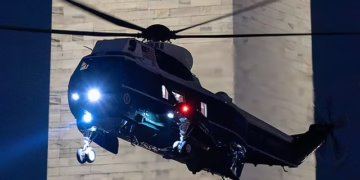
Diplomatic tracks have intensified following statements from US President Donald Trump confirming the suspension of planned military strikes against Iranian targets. Speaking aboard Air Force One, Trump stated that mediation efforts by Saudi Arabia, the United Arab Emirates, Qatar, and Oman prompted a pause in military action. Direct and indirect talks between US representatives and Iranian intermediaries are scheduled to begin on Monday afternoon.
In statements posted to Truth Social, Trump indicated that a final agreement must secure the immediate and full reopening of the Strait of Hormuz alongside verified measures regarding Iran’s nuclear program. Iranian media outlets have acknowledged the ongoing regional discussions while disputing claims that Tehran formally requested a halt to US strikes.