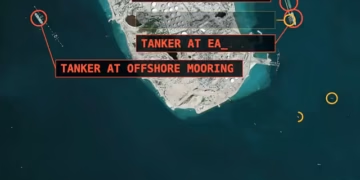



Pentagon targets reconstructed radar networks and naval assets as Washington intensifies economic sanctions against Tehran
WASHINGTON — September 2, 2026 : Iran is locked in an economic and military “death spiral” and lacks operational control over the vital Strait of Hormuz, US Treasury Secretary Scott Bessent said, following fresh American strikes against reconstituted Iranian surveillance and naval infrastructure.
Speaking after US Central Command launched extensive airstrikes against coastal targets across southern Iran, Bessent dismissed Tehran’s attempts to reassert dominance over the world’s most critical crude oil transit passage.
US forces struck radar positions, air-defense systems, naval craft, communications hubs, and mine-laying gear on Tuesday. Bessent stated that Tehran had been trying to assemble an improvised tracking apparatus along the shoreline before American munitions wiped out the installations.


“Iran does not have control of the Strait. And they are in a death spiral,” Bessent said, describing the dismantled equipment as a makeshift patchwork radar network.
According to Central Command, the Tuesday offensive came after Iranian forces positioned rocket launchers and prepared sea-mining assets in the waterway. That activity prompted an initial exchange, including Iranian missile fire directed at US positions in Jordan, before American forces launched broader, multi-target strikes. Previous sorties had already battered military assets on Larak Island.

President Donald Trump confirmed that the operation eliminated radar units Iranian engineers had been attempting to restore.

Alongside military operations, Washington is escalating its financial offensive. Bessent indicated that the Treasury Department is preparing rolling sanctions against Iranian financial institutions, with new designations potentially rolled out every week to deepen Tehran’s international isolation. An active US naval cordon has already choked off at least 1.5 million barrels per day of Iranian crude exports.
Tehran has pushed back aggressively against Washington’s assertions. The Islamic Revolutionary Guard Corps warned that US actions will disrupt passage further, maintaining that if Iranian crude cannot reach global buyers, other regional exports will be halted. Two commercial tankers were hit near the passage on Monday, and Iranian state media reported retaliatory drone and missile launches against American regional positions following Tuesday’s strikes.
The waterway normally handles nearly a fifth of the world’s petroleum consumption. While transit has not ceased entirely, commercial tanker traffic remains well below historical norms as maritime insurers weigh the persistent risk of strikes and sea mines.