

UAE condemns “piracy” and “economic coercion” after cruise missiles strike vessels within Omani territorial waters amid escalating regional conflict.
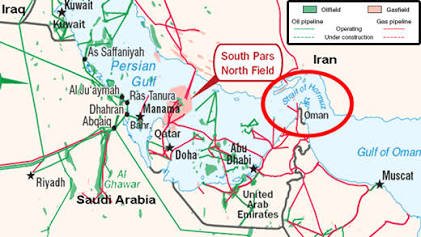
ABU DHABI, July 14, 2026 — One Indian crew member was killed and eight other maritime workers were injured on Tuesday after Iranian cruise missiles struck two United Arab Emirates-flagged national oil tankers in the Strait of Hormuz. The targeted attack, which occurred within Omani territorial waters, marks a severe escalation in regional shipping hostilities and has drawn sharp condemnation from UAE authorities.

The UAE Ministry of Defence (MoD) confirmed that the commercial tankers Mombasa and Al Bahiyah were targeted by two Iranian cruise missiles while transiting the southern shipping lane of the strategic waterway. The fatal casualty, an Indian national, was on board the Mombasa.


Among the eight wounded crew members, four sustained critical injuries. The injured personnel consist of six Indian nationals and two Ukrainian nationals, according to official government statements. Emergency teams successfully brought the resulting onboard fires under control, though both vessels suffered significant material damage.
The UAE Ministry of Foreign Affairs (MoFA) condemned the attack in the strongest terms, describing the hostile action as a flagrant violation of international law and United Nations Security Council Resolution 2817. Adopted on March 11, 2026, Resolution 2817 strictly prohibits the targeting of commercial vessels and any attempts to obstruct international navigation.
“Targeting commercial shipping and using the Strait of Hormuz as a tool of economic coercion or blackmail constitutes an act of piracy and poses a direct threat to the stability of the region, its peoples, and global energy security.”
— UAE Ministry of Foreign Affairs (MoFA)
The Ministry of Defence added that the UAE “reserves its full right to respond to this escalation” and has raised military readiness to safeguard national security, territory, and trade interests. Abu Dhabi expressed deep condolences to the families of the victims and extended formal sympathies to the Government of India.

Retaliation and Geopolitical Context
Iran’s Islamic Revolutionary Guard Corps (IRGC) claimed responsibility for disabling what it described as “offending” supertankers. Iranian state media asserted that the vessels were hit after ignoring repeated maritime warnings, turning off their automatic tracking transponders, and entering a restricted mined zone.
This strike follows a rapid downward spiral in regional stability. The incident occurred after the IRGC declared the Strait of Hormuz closed, triggering massive retaliatory airstrikes by the United States against 140 military installations inside Iran. In response to the missile strikes on the tankers, Washington announced it will initiate a strict maritime blockade of all commercial traffic entering or exiting Iranian ports starting Tuesday evening.
The Strait of Hormuz remains the world’s most critical energy transit choke point. Approximately one-fifth of the global petroleum consumption passes through this narrow maritime corridor daily, making any physical disruption a direct threat to global supply chains and economic stability.