


Tehran rules out reopening the strategic waterway to American vessels until all seven conflict-resolution conditions are satisfied
DUBAI / TEHRAN — October 12, 2026 :Iran has rebuffed Washington’s response to its proposal for ending hostilities in the Persian Gulf, declaring on Sunday that while the United States accepted several points of a seven-condition framework, the overall offer fell short of requirements to reopen the Strait of Hormuz.
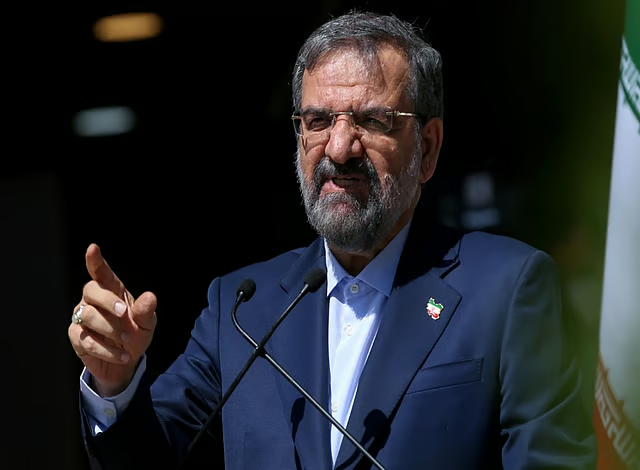
Mohsen Rezaei, secretary of Iran’s Supreme National Security Council, stated late Sunday that diplomatic relations between the two adversaries would not revert to their previous footing.


Writing on X following an appearance on Iranian state television, Rezaei said Tehran had delivered seven explicit demands to Washington two weeks earlier through mediators, making clear that maritime traffic through the chokepoint would remain restricted until those terms were fulfilled.
“In their response, they have accepted some of our conditions, while others remain unclear,” Rezaei said, describing the American position as insufficient. He added that Tehran considers the current round of exchanges closed and will not formulate further replies until its core requirements are implemented.
The exchange follows indirect diplomacy conducted on the sidelines of the United Nations General Assembly in late September. Tehran submitted an offer to restore unimpeded commercial shipping through the Strait of Hormuz within seven days if the United States agreed to its terms. Those conditions encompass lifting naval restrictions, unfreezing blocked Iranian sovereign funds abroad, and removing measures obstructing Iranian crude exports.

Qatar served as the primary conduit for the written correspondence, with additional diplomatic channels active through Baghdad and Islamabad over the past two months.
Rezaei sharply criticized the US naval presence, alleging that American vessels have attempted clandestine oil shipments through the waterway.
“After the US fleet failed to reopen the Hormuz, it has resorted to smuggling,” Rezaei wrote, characterizing the maneuver as a military embarrassment.

The Strait of Hormuz, through which roughly a fifth of global petroleum and liquefied natural gas historically passes, has faced severe operational disruption since regional hostilities escalated earlier this year. Tanker strikes and maritime mining prompted major international shipping lines to suspend or reroute transit around the Cape of Good Hope, sustaining elevated global energy and war-risk insurance costs.
Rezaei underscored that Iran intends to leverage its geographic control of the channel as a sovereign economic and strategic asset. With Washington’s formal concession on key items still lacking and Tehran refusing direct talks before full compliance, shipping executives and regional diplomats expect the maritime stalemate to drag on.