


Tehran’s new defence minister cautions Washington against escalations, while cross-border projectile fire injures six in southern Saudi Arabia.
DUBAI / JERUSALEM — October 19, 2026 : Regional friction intensified across multiple fronts on Sunday as Egypt committed military support to Saudi Arabia following renewed cross-border strikes from Yemen, while Israeli Prime Minister Benjamin Netanyahu leveraged a high-profile endorsement from US President Donald Trump ahead of critical parliamentary elections.
Diplomatic alignments and military warnings rippled across the region on Sunday, highlighting the volatile dynamics linking the Persian Gulf, the Levant, and North Africa.


In Cairo, Egypt’s National Defence Council, led by President Abdel Fattah el-Sisi, declared its readiness to provide “all necessary and possible support” to Saudi Arabia to defend its sovereignty, critical infrastructure, and security. The declaration followed discussions regarding regional stability, coming a day after President el-Sisi requested parliamentary approval to authorize potential overseas deployments of Egyptian armed forces and military assets.
The security alert in the Gulf was underscored on the ground in southern Saudi Arabia. The kingdom’s Civil Defence confirmed that a cross-border projectile launched by Yemen’s Houthi militia struck a residential district in Najran, injuring six citizens. The impact damaged three homes and three civilian vehicles, prompting international calls from Gulf Cooperation Council officials for decisive multilateral action to curb strikes on civilian targets.
Regional solidarity was also reinforced within the Gulf Cooperation Council. In Abu Dhabi, Dr. Anwar Gargash, Diplomatic Adviser to UAE President Sheikh Mohamed bin Zayed Al Nahyan, reaffirmed the UAE’s strategic alignment with Riyadh, describing Saudi and Emirati security and destiny as deeply interconnected. The diplomatic messaging coincided with high-level defence talks between Saudi Defence Minister Prince Khalid bin Salman and UAE leadership.
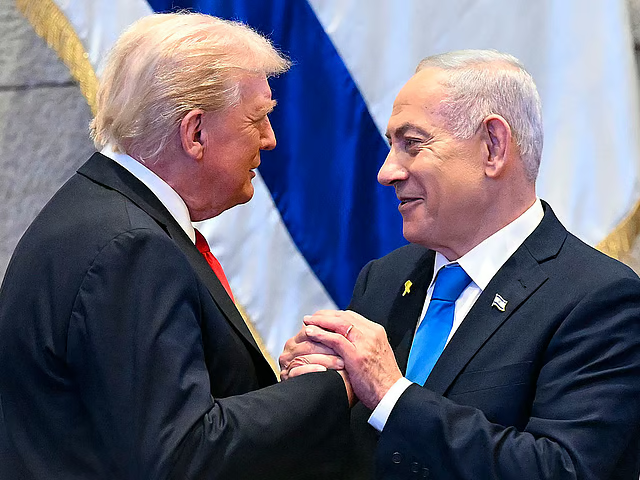
Parallel to the Gulf confrontations, political shifts unfolded in Jerusalem. US President Donald Trump issued a formal endorsement of Benjamin Netanyahu, describing the veteran Israeli premier as a crucial partner in confronting regional adversaries. Netanyahu quickly seized on the endorsement, telling domestic audiences that his close relationship with the White House offers Israel the decisive leverage required to neutralize Tehran’s regional influence.

Israel is scheduled to hold parliamentary elections on October 27. Opinion polls indicate a tight contest, with Netanyahu’s governing coalition fighting to retain its parliamentary majority amid heightened domestic and regional scrutiny.
Across the Persian Gulf, Tehran signaled immediate defiance. The Iranian parliament officially confirmed Mehrdad Akhlaghi Ketabchi as the new Minister of Defence and Armed Forces Logistics, filling a post left vacant following the death of former minister Aziz Nasirzadeh.

Shortly after securing 237 votes of approval from lawmakers, Akhlaghi issued a stern message to Washington, warning against any potential strikes on Iranian soil or assets and stating that Tehran remains fully prepared to absorb and counter severe military threats.
With political campaigns accelerating in Israel and air defence networks on high alert across the Gulf, the interconnected moves by Washington, Cairo, Riyadh, and Tehran reflect an increasingly delicate regional equilibrium.