


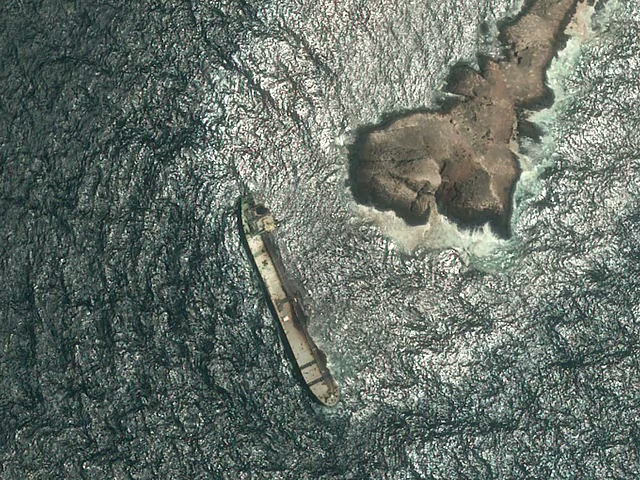
The crude oil slick from the Caroline Bezengi, carrying around 800,000 barrels, has contaminated beaches in Ras Madrakah, threatening sensitive marine reserves.
MUSCAT / DUBAI:Crude oil leaking from the grounded Suezmax tanker Caroline Bezengi off Oman’s southern coast has begun washing up on the sultanate’s mainland beaches, environmental authorities and the United Nations maritime agency confirmed, as seasonal monsoon weather continues to delay salvage operations.
The International Maritime Organization (IMO) said on Wednesday that oil drifting northeast from the partially submerged vessel near Al-Qibliyyah Island has reached coastal stretches along Oman’s southeastern mainland. The Environment Authority of Oman confirmed that monitoring teams identified crude oil pollution along beaches in the Ras Madrakah area, approximately 200 kilometers north of the initial grounding site.


The 899-foot tanker, carrying an estimated 800,000 barrels (130,000 metric tons) of Russian crude oil, ran aground on June 30 about 22 nautical miles offshore from Sharbithat. The vessel had previously suffered an explosion and fire in early June while transiting off Yemen after departing the Black Sea port of Novorossiysk bound for India.
Strong seasonal Khareef monsoon winds and rough sea conditions in the Arabian Sea have severely limited emergency access to the vessel, preventing salvage teams from securing the hull or deploying offshore containment booms effectively. Satellite analysis initially indicated that the slick had expanded across nearly 400 square kilometers, concentrated heavily around the environmentally protected Hallaniyat archipelago.

Environmental groups including Greenpeace and PAX have warned that the spill presents an impending ecological crisis for the region. The affected waters surrounding the Hallaniyat Islands encompass a pristine marine reserve established to safeguard critical habitats for endangered Arabian Sea humpback whales, sea turtles, Socotra cormorants, and coral reefs.

The Caroline Bezengi is identified as part of the “shadow fleet” of aging, loosely regulated tankers used to bypass Western sanctions on Russian petroleum exports. Both the European Union and the United Kingdom have previously placed the vessel under sanctions. Complex legal liabilities surrounding sanctioned ships and marine insurance restrictions have further complicated international response coordination.
Omani authorities said emergency contingency plans remain active, with shoreline cleanup crews deployed along vulnerable mainland coastal sectors. Officials noted that nearby seawater desalination plants and major municipal infrastructure currently remain operational without immediate disruption, though monitoring teams are tracking potential drift patterns toward Masirah Island further north.