


Missile strike targets Aden airport perimeter in Yemen while Washington presses Riyadh to weigh Israeli security cooperation
RIYADH / WASHINGTON — Saudi air defence forces intercepted incoming ballistic missiles and armed drones targeting strategic infrastructure, including the Red Sea energy hub of Yanbu, while two projectiles struck the grounds of Yemen’s Aden International Airport.
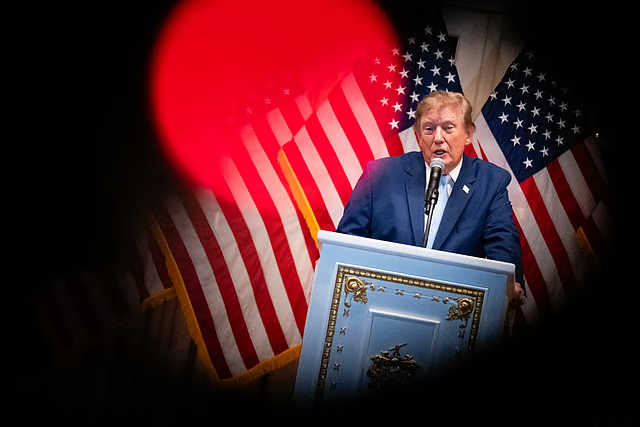
The cross-border escalation unfolded as US President Donald Trump signed an executive order waiving punitive energy sanctions and import tariffs against Russia under the Graham Act, citing American national economic interests.


The Saudi-led military coalition confirmed its forces destroyed a ballistic missile aimed at Yanbu—a critical export terminal that allows Saudi crude to bypass the vulnerable Strait of Hormuz. Air defence units also brought down two cruise missiles traversing the Red Sea and three explosive-laden drones over Riyadh and the kingdom’s southern border provinces. No casualties or major damage were reported.
Hours earlier in southern Yemen, two missiles slammed into the perimeter of Aden International Airport as a commercial flight bound for Cairo prepared for takeoff, according to the Aden Security Department. Operations were briefly suspended, though no fatalities occurred. The coalition said it would present declassified surveillance footage detailing illicit weapons transfers funneled to Houthi forces.

In Washington, President Trump urged Saudi leadership to consider accepting direct Israeli defensive and intelligence assistance to counter Houthi aerial strikes. Tehran has publicly rejected allegations that it directs or participates in attacks launched from Yemen into Saudi territory.
Heightened regional alert prompted the US Central Command to review force protection measures for the more than 50,000 American military personnel deployed across the Middle East. CENTCOM officials stated that Iranian economic infrastructure remains under severe pressure despite regional proxy activity. The US Department of State and embassy officials in Riyadh issued security notices advising travelers of flight diversions and potential airspace closures across Saudi civilian airports.
Concurrently, President Trump exercised presidential waiver authorities under Section 115 of the Lindsey O. Graham Sanctioning Russia and Iran Act of 2026. The order halts the enforcement of punitive secondary tariffs—which reached up to 100 percent on major global importers of Russian crude oil and natural gas—just days before they were scheduled to take full legal effect.

Congressional certification documents submitted by the White House stated that enforcing the restrictions immediately would trigger destabilizing energy shocks in domestic and allied consumer markets. The waiver provides direct relief to leading Asian buyers of Russian energy, including India and China, who had lodged formal diplomatic objections against secondary penalties.
Brent crude climbed above $110 per barrel following the reports of projectile activity near Saudi export routes, before settling as air corridors reopened and energy infrastructure reported uninterrupted operations.