


US president signals willingness to negotiate with Tehran while threatening military action if diplomatic efforts collapse, as global oil prices drop.
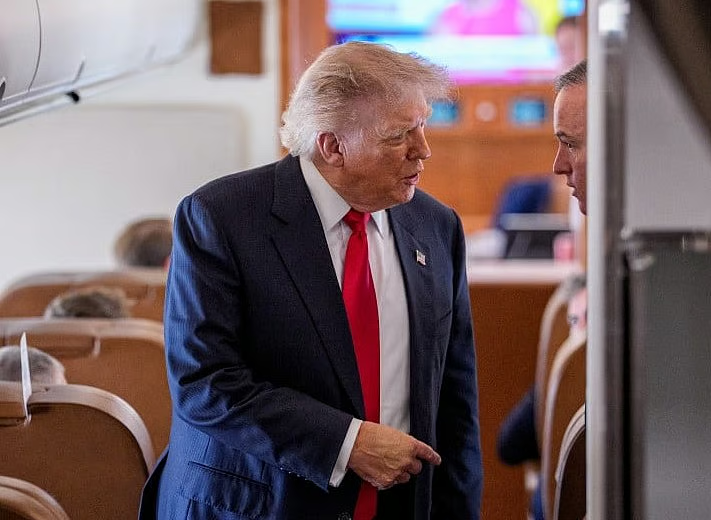
WASHINGTON : US President Donald Trump is hosting Israeli Prime Minister Benjamin Netanyahu and Ukrainian President Volodymyr Zelenskyy for separate high-stakes White House meetings on Tuesday, as Washington balances diplomatic maneuvers over Iran’s nuclear program with efforts to address conflicts in West Asia and Eastern Europe.


The White House diplomatic push follows Trump’s statement that Washington paused a planned series of military strikes against Iranian targets after a direct request from Tehran. Trump warned that the United States remains prepared to resume severe military action if negotiations fail to produce a comprehensive nuclear agreement. Iranian officials, however, publicly denied that direct negotiations with Washington were underway.


Discussions between Trump and Netanyahu are expected to focus heavily on Iran’s nuclear capabilities, regional security, and the stabilization of maritime trade. Israeli officials indicated that Netanyahu intends to present updated intelligence detailing Iran’s nuclear recovery efforts.
Separately, Trump’s meeting with Zelenskyy centers on the ongoing conflict between Ukraine and Russia, alongside recent allegations regarding Russian intelligence sharing in West Asia. Both visiting leaders are also in the US capital to attend the funeral of former Republican Senator Lindsey Graham.
On another diplomatic front, the US State Department confirmed that technical working groups from Israel and Lebanon will meet in Rome from August 4 to August 6. The US-mediated talks aim to advance a security framework agreement, expand a designated pilot zone in southern Lebanon, and resolve outstanding border disagreements.
Global energy markets registered sharp movements as crude oil prices fell. The drop in oil benchmarks occurred despite a pull-back in commercial shipping traffic through strategic maritime chokepoints, including the Strait of Hormuz and the Bab al-Mandeb Strait. Traders continue to monitor potential disruptions against the backdrop of fluctuating diplomatic signals between Washington and Tehran.