

Tehran ties maritime access to sanctions relief and an end to the naval blockade, while Riyadh, Islamabad, and Ankara coordinate under the Mecca collective defence pact.
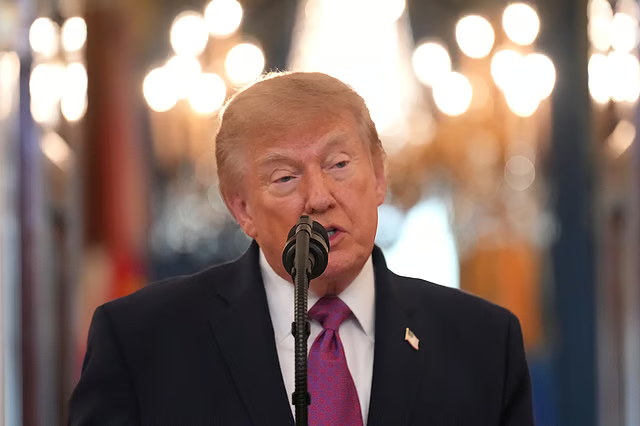
RIYADH / WASHINGTON — September 26, 2026 : U.S. President Donald Trump has rejected a seven-day proposal presented by Iran to reopen the critical Strait of Hormuz, dealing a swift setback to diplomatic efforts on the sidelines of the United Nations gathering.

The diplomatic standoff unfolded alongside fresh military escalation in the Gulf, where Saudi air defence units intercepted two Houthi explosive drones closing in on the capital, Riyadh.

The Iranian initiative, outlined in New York by Foreign Minister Abbas Araghchi, offered to restore navigation through the contested shipping channel in exchange for an immediate ceasefire, an end to the U.S. naval blockade, the release of frozen financial assets, and substantive relief from oil export sanctions. Washington rebuffed the conditional terms within hours, sustaining a strategic impasse that has choked global oil transport routes for nearly seven months.


The rejection coincided with high-stakes discussions between Trump and Chinese President Xi Jinping during a state visit at the White House. Washington raised concerns regarding alleged logistical and economic support from Beijing to Tehran. Beijing continues to urge de-escalation, while the American administration insists that freedom of navigation through Hormuz must be restored without financial concessions.
Over Saudi skies, military authorities confirmed that interceptor batteries destroyed two hostile drones launched by Yemen’s Houthi militia targeting urban perimeters around Riyadh. Air defences separately shot down a ballistic missile directed at Khamis Mushait, home to the King Khalid Air Base in the southwest.
Houthi political bureau member Hezam Alasad described the salvo as a calibrated preview, warning that the operations represent an initial staging phase for broader missile and naval actions.
The repeated cross-border strikes prompted swift diplomatic and security consultations among signatories to the tripartite Mecca Joint Defence Agreement. Saudi Defence Minister Prince Khalid bin Salman met with Pakistan’s Chief of Defence Forces and Chief of Army Staff, Field Marshal Asim Munir, following a formal convention of coalition military commanders.
Officials from Saudi Arabia, Pakistan, and Turkey reaffirmed their mutual defence commitments established in August, declaring that hostile operations against Saudi economic and civil infrastructure trigger joint deterrence mechanisms.
Energy markets registered sharp volatility following the dual developments, as insurance carriers suspended additional transit guarantees across the Arabian Gulf, maintaining pressure on European and Asian benchmark crude contracts.