


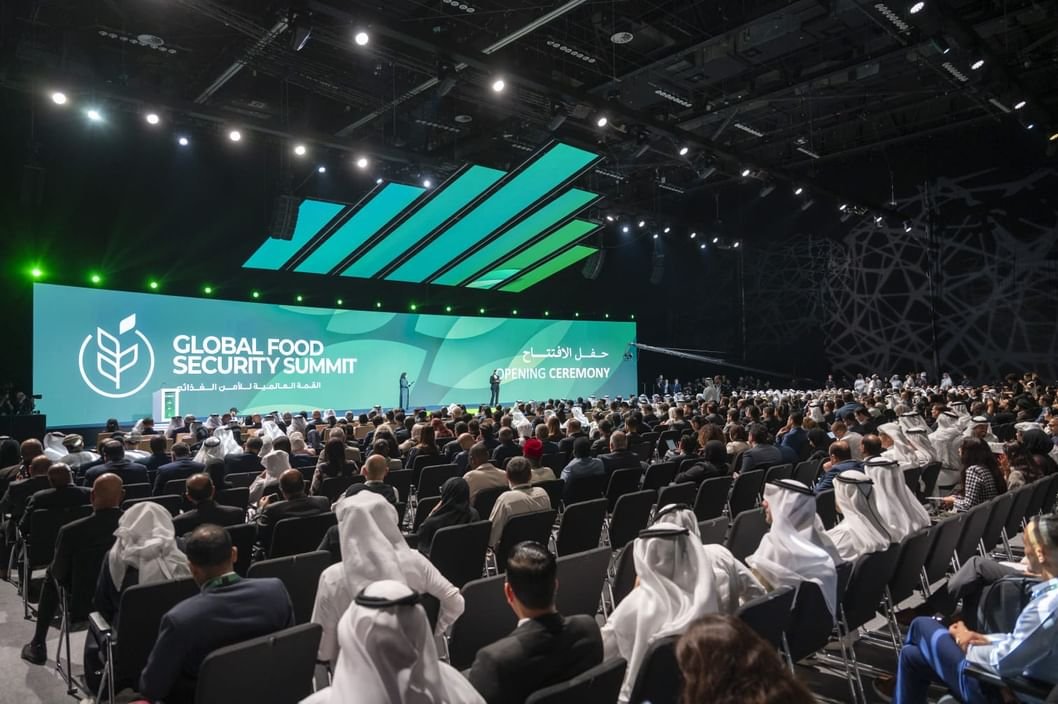
The cross-border initiative connects East African agricultural output directly to Gulf markets, combining cold-chain logistics, processing, and private capital.
ABU DHABI, Oct. 7, 2026 : The United Arab Emirates and Tanzania have launched an integrated agricultural corridor designed to bypass supply chain bottlenecks and deliver East African farm output straight to Gulf markets.
Announced on the opening day of the Global Food Security Summit in Abu Dhabi, the Tanzania-UAE Green Silk Road Initiative sets up an end-to-end framework covering crop production, processing facilities, temperature-controlled storage, and direct trade routes.
The venture brings together Abu Dhabi National Investment and Development (ADID), the Tanzania Mercantile Exchange (TMX), and private agricultural producers in Tanzania.


Rather than functioning as a standard import agreement, the project is structured as an investment corridor. Speaking at the summit, ADID Chief Executive Shamsa Al Fahim said the initiative addresses systemic vulnerabilities exposed by recurring supply disruptions in recent years. Food security requires building systems that can handle transport, processing, and storage efficiently, rather than treating agricultural trade as isolated purchase orders, Al Fahim explained.

For Tanzania, the pact represents an opportunity to leverage underutilized arable land and commercialize agricultural exports. TMX Chief Executive Godfrey Malekano told delegates in Abu Dhabi that the East African country wants to serve as a reliable food basket for the Arabian Peninsula through joint commercial ventures rather than foreign aid dependencies.
The announcement came during an opening session that gathered more than 350 chief executives, 20 government ministers, and representatives from 70 nations to examine structural solutions for vulnerable food systems.

Officials from multilateral development banks and UN bodies warned that capital allocation remains a primary obstacle to agricultural resilience, particularly for primary producers. Diane Menville, chief financial officer of the International Fund for Agricultural Development (IFAD), told delegates that smallholder farmers currently secure less than one percent of global climate finance, pointing to blended public-private financing models as the fastest route to de-risk commercial farm operations.
Specialists from the UN Food and Agriculture Organization (FAO) and the World Food Programme (WFP) also emphasized that food security challenges across the Middle East and Africa have shifted from pure harvest volume to systemic affordability and distribution logistics. Conflict, climate volatility, and fragmented cold-chain infrastructure continue to create localized deficits despite global production surpluses.
The two-day summit in Abu Dhabi will conclude following further negotiations on cross-border agricultural contracts, logistics corridors, and sovereign food reserves across the Middle East, Africa, and South Asia.