


National Centre of Meteorology predicts rising cloud cover ahead of mid-week convective activity as Al Qayz summer phase closes
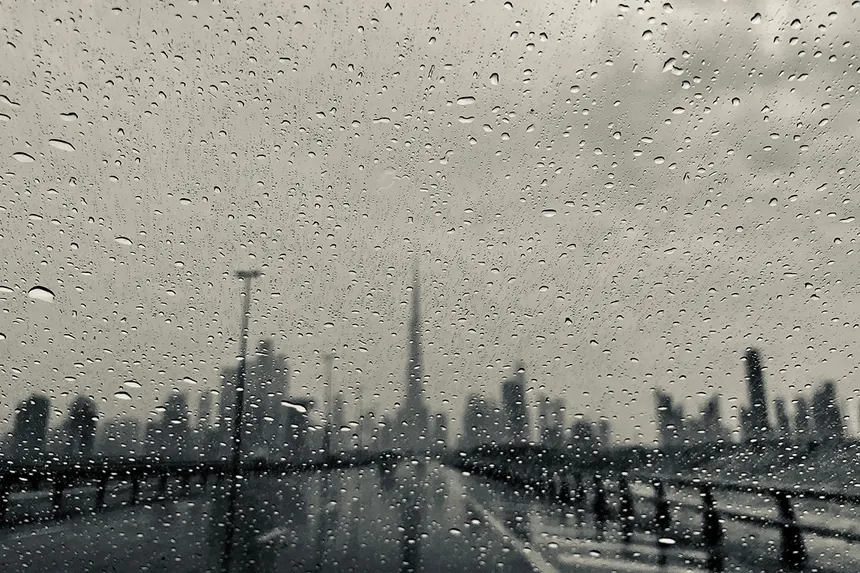
DUBAI, August 15, 2026:Parts of the northern and eastern UAE may experience light, localized rainfall on Sunday as a gradual shift in atmospheric conditions brings increased cloud cover and elevated humidity across the country, according to the National Centre of Meteorology (NCM).
While Saturday remains mostly dry, fair, and intensely hot—with inland temperatures pushing toward 49°C—humidity is set to surge overnight into Sunday morning across coastal zones, raising the potential for localized mist and fog.

The NCM’s forecast indicates that cloud cover will build over northern and eastern sectors by Sunday afternoon, creating conditions conducive to light showers. Winds will remain light to moderate, initially southeasterly before shifting northwesterly at speeds reaching 30 km/h. Coastal areas will see peak temperatures between 40°C and 45°C, while mountain elevations offer slight relief with maximums ranging from 32°C to 38°C.



Meteorological instability is expected to intensify after the weekend. From Monday through Wednesday, convective cloud formations are projected to develop across eastern and southern regions during afternoon hours. These formations could trigger more pronounced rainfall and localized dust storms as wind speeds pick up to 40 km/h.
This mid-August weather pattern aligns with the final phase of the traditional peak summer season, known locally as Al Qayz. According to Ibrahim Al Jarwan, Chairman of the Emirates Astronomical Society, the period of Marakhiyat Al Qalaid began on August 11 with the rising of the Al Kulaybin star and will run through September 3.
While high humidity and near-50°C temperatures persist, this period signals the early transition toward milder conditions. The region’s next major astronomical marker occurs on August 24 with the pre-dawn appearance of the Suhail (Canopus) star, historically associated across the Arabian Peninsula with the gradual easing of summer heat prior to the autumnal equinox on September 23.