

Intercepted communications and regional tanker strikes reveal hardline Iranian stance after the expiration of the 60-day diplomatic window.
WASHINGTON / DUBAI — A landmark diplomatic attempt to halt hostilities between the United States and Iran has unraveled, with hardline leaders in Tehran treating a June ceasefire agreement as a temporary “tactical pause” to prepare for wider regional conflict, according to a U.S. Congressional report.

The assessment, compiled by congressional analysts and citing intelligence, Iranian leadership statements, and Arab diplomatic officials, indicates Tehran used the 60-day negotiation window established under the June 17 Islamabad Memorandum of Understanding (MOU) to reinforce defensive positions and prepare for escalating maritime combat.

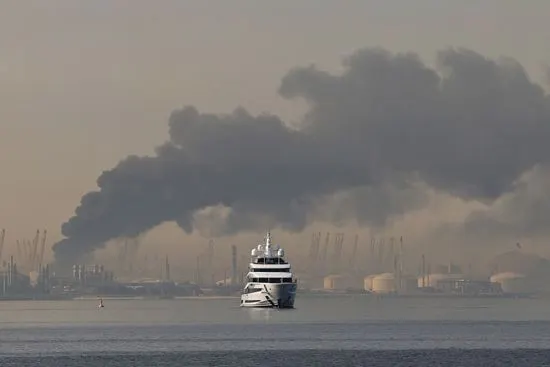
The collapse of the agreement coincides with a sharp escalation in commercial shipping attacks near critical Middle Eastern maritime chokepoints. Yemen’s Houthi movement claimed responsibility for strikes targeting a Saudi vessel in the Bab Al Mandab Strait, while at least three commercial tankers operated by the Abu Dhabi National Oil Company (ADNOC) came under direct attack by Iranian forces in the Strait of Hormuz.


The U.S. Congressional report warns that the interlinkage of the internal conflict in Yemen, the ongoing Saudi-Houthi confrontation, and direct U.S.-Iranian hostilities has created an interconnected regional theater, severely complicating international diplomatic efforts to isolate or de-escalate individual crisis points.
Failure of the Versailles Agreement
The diplomatic framework collapsed following the expiration of the 60-day negotiation window. Signed on June 17, 2026, at the Palace of Versailles by U.S. President Donald Trump, the Islamabad MOU was negotiated via Pakistani and Qatari mediation to halt military operations across all fronts—including Lebanon—and restore global energy flow.
Under the 14-point framework:
- Maritime Access: Iran pledged to utilize best efforts to ensure unhindered, charge-free passage for commercial vessels transiting the Strait of Hormuz for a 60-day period.
- Sanctions & Blockade: The U.S. committed to lifting its naval blockade within 30 days and issuing Treasury Department waivers allowing Iran to export crude oil and access restricted foreign reserves.
- Economic Development: Washington agreed to work with regional partners on a $300 billion reconstruction initiative for Iran contingent upon a permanent accord.
However, initial compliance disintegrated by early July. Washington cited continued proxy attacks and Iranian interference with commercial shipping as grounds for halting sanctions relief, while Iranian officials accused the U.S. and Israel of using the truce to relieve global economic pressure before launching deeper military strikes against Iranian nuclear infrastructure.
Strategic Pivot to Maritime Escalation
Congressional analysts note that intercepted communications and intelligence assessments point to a deliberate shift by Iran’s Islamic Revolutionary Guard Corps (IRGC). Rather than negotiating permanent nuclear constraints or maritime access rules, Iranian strategists viewed the diplomatic accord as an asymmetrical opportunity to reposition forces.
“Tehran’s security apparatus treated the MOU not as a gateway to permanent de-escalation, but as a operational breathing room,” the report stated, adding that Iran used the period to reinforce anti-ship missile batteries along the Persian Gulf coast and expand naval mine arrays.
The United Arab Emirates Foreign Ministry condemned recent attacks on ADNOC-operated tankers transiting the Strait of Hormuz, calling on Iran to cease unprovoked operations. The incidents have raised global oil security concerns, as shipping lines face surging war-risk premiums and rerouted transit lines around the Arabian Peninsula.
With the formal 60-day window expired and military operations resuming in the Gulf and Bab Al Mandab, U.S. and regional officials warn that brief diplomatic pauses are unlikely to hold without structural agreements on nuclear enrichment and regional proxy activities.