

President Donald Trump warns of wider strikes on critical Iranian infrastructure if commercial vessel attacks continue.
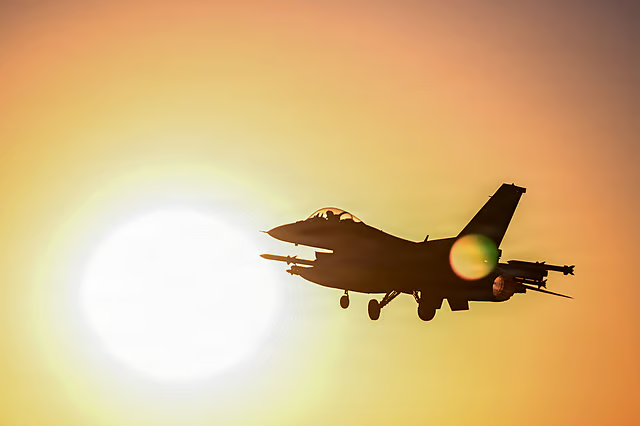
WASHINGTON/DUBAI : The United States military launched a fresh wave of airstrikes against Iranian targets late Wednesday, extending a weeks-long campaign aimed at curbing threats to commercial shipping through the Strait of Hormuz.
The latest strikes targeted Iranian air defense systems, coastal radar units, surface-to-air missile sites, anti-ship cruise missile launch positions, and port facilities near the critical maritime chokepoint. U.S. Central Command (CENTCOM) confirmed that operations are designed to degrade the offensive capabilities of the Islamic Revolutionary Guard Corps (IRGC) and safeguard international navigation.
President Donald Trump warned that Washington is prepared to expand military operations to Iranian infrastructure if attacks on tankers and merchant ships persist. U.S. officials indicated that military planners have presented options for an expanded aerial campaign lasting up to two weeks should diplomatic efforts fail to resolve the crisis.




The conflict centers on control over the Strait of Hormuz, a narrow waterway between the Persian Gulf and the Gulf of Oman through which approximately 20% of the world’s petroleum and liquefied natural gas passes. Tensions escalated rapidly after Iranian forces attempted to assert greater jurisdiction over transit traffic, laying sea mines, launching cruise missiles, and deploying fast-attack craft against merchant vessels, including tankers escorted by American naval forces.
Tehran rejected a recent diplomatic compromise brokered by Omani mediators to establish joint transit arrangements in the strait, insisting on full national sovereignty over the waterway. Iranian state media reported structural damage and civilian casualties near coastal ports from American strikes, claims Washington refuted, stating all targets are verified military assets.
International shipping operators have diverted numerous vessels around Africa or delayed transit through the Gulf, driving crude oil prices higher and intensifying concerns over long-term global energy security. CENTCOM officials stated that naval escort operations and targeted strikes will continue until Iran ceases hostile maneuvers against commercial traffic.