


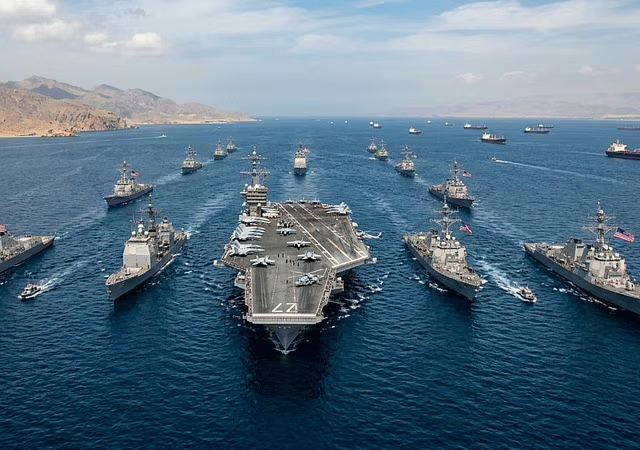
Tehran retaliates with drone and missile attacks on regional facilities in Kuwait and Jordan, while Bahrain sounds sirens and the IRGC claims maritime disruptions in the strategic waterway.
DUBAI — July 18, 2026:The United States military has completed its seventh consecutive night of intense airstrikes against military infrastructure across Iran, triggering a wave of retaliatory drone and missile attacks targeting U.S.-linked facilities in Kuwait and Jordan. Amid the widening regional escalation, warning sirens sounded across Bahrain, while the Islamic Revolutionary Guard Corps (IRGC) claimed to have halted international shipping inside the volatile Strait of Hormuz.
U.S. Central Command (CENTCOM) confirmed the completion of the latest aerial campaign early Saturday, stating that warships, fighter aircraft, and drones successfully targeted Iranian surveillance networks, logistics infrastructure, and underground weapons storage facilities. The overnight operations heavily focused on coastal and interior hubs, including Bandar Abbas, Bushehr, Qeshm Island, Ahvaz, and the central city of Yazd.


Iranian state media reported that the latest wave of U.S. strikes killed at least three people and wounded eight others in the southern Hormozgan province, which borders the strategic chokepoint. Local officials stated that infrastructure damage was extensive, affecting transport networks and transit lines near main commercial shipping ports.
Tehran responded swiftly by launching retaliatory strikes across the Gulf. In Kuwait, defense officials confirmed that a drone strike struck an oil and utilities infrastructure node, causing localized power facility damage and wounding several soldiers. Kuwaiti authorities are currently assessing the impact on critical desalination networks. Concurrently, Jordan reported interceptions of projectiles aimed at facilities hosting U.S. personnel.

In Manama, air defense warning systems were activated as maritime tensions reached a critical threshold. The IRGC claimed its naval forces intercepted and halted four commercial vessels transiting the Strait of Hormuz, alleging that the ships ignored regional warnings. Iranian military channels also asserted that two commercial oil tankers suffered explosions due to naval mines planted in the waterway.

CENTCOM officials quickly rejected the Iranian claims regarding tanker explosions, labeling them as misinformation designed to disrupt global energy markets. The U.S. military maintained that international shipping lanes remain under close surveillance by allied naval assets to counter unauthorized blockades.
A senior Iranian military advisor warned that Tehran is prepared to shift to “full-scale offensive operations” across the region if the U.S. aerial campaign continues. The rapid breakdown of recent maritime understandings has left international airlines scrambling, with several major global carriers suspending flights to key Gulf capitals through the end of the season due to unstable airspace.