

President Donald Trump confirms targeted military action near Strait of Hormuz amid diplomatic push to end eight-month conflict
WASHINGTON, United States — The United States military launched targeted strikes on Friday against an Iranian air defense system near the strategic Strait of Hormuz, President Donald Trump confirmed, even as Iranian officials reviewed a diplomatic framework presented by Qatari mediators to resolve disputes over Tehran’s nuclear program.
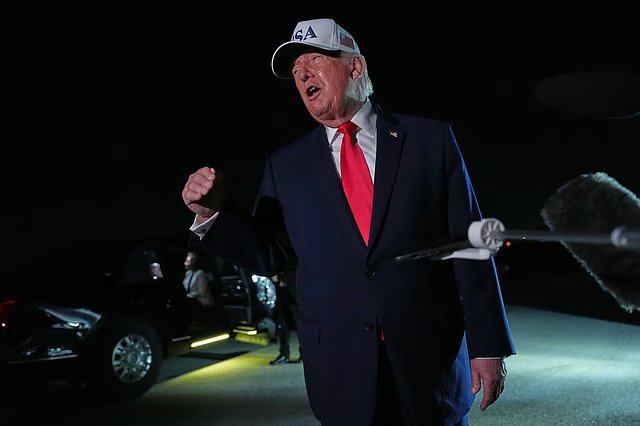
Iranian state media reported two explosions in the Suza area of Qeshm Island, a key position along the crucial waterway for global oil shipments. Speaking to reporters upon arriving in West Palm Beach, Florida, on Friday evening, Trump described the operation as minor and focused.
“They built a little bit of an anti-aircraft device and we knocked it out in about 15 minutes, maybe five,” Trump said, without offering further tactical specifics.


US officials have noted that most of Iran’s air defense systems were destroyed or severely degraded during Israeli strikes in June 2025 and during the initial phase of the current conflict, with intelligence assessments anticipating Iranian efforts to rebuild military infrastructure over time. The operation followed defensive strikes earlier in the week targeting Qeshm, Hengam Island, and mainland installations near Bandar Abbas.
The strike marks the first US military action since the Republican Party lost control of both chambers of Congress in Tuesday’s midterm elections, an electoral setback driven in part by public frustration over the eight-month war and soaring global fuel prices.
Parallel to the military action, regional diplomacy intensified. Two Middle East government officials confirmed that Iran is reviewing proposals delivered by Qatar aimed at narrowing divisions over Tehran’s atomic activities. One official stated that Tehran remains reluctant to enter direct negotiations with the Trump administration until Washington agrees to core ceasefire terms, including lifting port blockades, removing sanctions, unfreezing overseas assets, paying war damages, and halting regional military operations.
According to regional officials, Qatari mediators proposed a two-day bridge framework to establish trust. Under this phased draft, Washington would ease its port blockade and release selected frozen Iranian funds, while Tehran would permit International Atomic Energy Agency inspectors access to bombed sites. On the second day, Iran would reopen the Strait of Hormuz under a transitional mechanism negotiated with Oman, pending broader multilateral arrangements with Gulf states, clearing the path toward comprehensive talks over Iran’s highly enriched uranium stockpile.

IAEA data indicates Iran holds 440.9 kilograms of uranium enriched to 60 percent purity, a short technical step below the 90 percent weapons-grade threshold.

Late Friday, US Central Command announced a State Department Rewards for Justice offer of up to $20 million and potential relocation for actionable intelligence on Iran’s nuclear program, including facilities, specialized equipment, personnel movements, and scientific networks.
Diplomatic outreach gained momentum across regional capitals. Trump and Defense Secretary Pete Hegseth held separate discussions with their Qatari counterparts, while Iranian Foreign Minister Abbas Araghchi conducted consultations with counterparts from Iraq, Tunisia, and Egypt to assess conditions for resuming negotiations.