


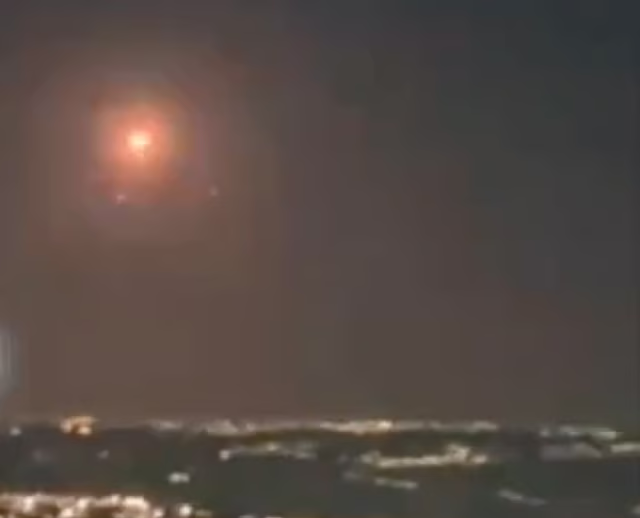
Air defense batteries neutralize incoming barrage launched by Iran’s Revolutionary Guard Corps as fragile diplomatic pause founders.
WASHINGTON / AMMAN — Air defense batteries successfully intercepted a barrage of Iranian ballistic missiles fired at a U.S. military base in Jordan on Tuesday evening, preventing casualties and damage in what military officials described as a failed surprise attack.
The attack, launched by Iran’s Islamic Revolutionary Guard Corps (IRGC) at approximately 5:45 p.m. Eastern Time (21:45 GMT), represents the first direct ballistic missile strike against American positions in the country since Washington briefly paused air operations to allow space for backchannel diplomatic talks.

U.S. Central Command (CENTCOM) confirmed in an official statement that defensive systems neutralized all incoming projectiles.


“Islamic Revolutionary Guard Corps forces launched multiple ballistic missiles from Iran in an attempted surprise attack on U.S. forces based in the Middle East. All Iranian missiles were successfully intercepted. U.S. forces remain vigilant and at a high state of readiness,” CENTCOM stated.
While military authorities did not officially disclose the exact installation, security officials noted the trajectory targeted Muwaffaq Salti Air Base near Azraq in northeastern Jordan. The facility hosts significant U.S. air assets and personnel and has repeatedly been targeted during previous rounds of cross-border strikes.
Video verified from central-western Iran showed long-range missile launches, followed by skyward contrails over eastern Jordan as Patriot air defense batteries and allied interceptors engaged the targets high above the desert floor.
Media outlets affiliated with the IRGC pushed back against claims of a complete interception, alleging that several warheads penetrated defensive umbrellas to hit ground infrastructure. U.S. defense officials dismissed those reports, reiterating that surveillance radars and post-strike damage assessments confirmed zero impact or structural losses.
The strike threatens to collapse a delicate, four-day operational pause in U.S. military strikes against Iranian infrastructure. Hostilities had escalated earlier in July following repeated exchanges across the region, which left several American service members dead and injured across regional outposts.

Jordanian air defence forces were placed on maximum alert during the incident. Officials in Amman confirmed that security forces monitored air space violations, ensuring debris fell away from populated residential centers.
The Pentagon has not indicated whether immediate retaliatory strikes will follow, though commanders stressed that defense systems across the Persian Gulf and Levant remain primed for potential follow-on attacks.